
Air Duct Cleaning: Repair or Replace? How Brier Creek Homeowners Decide
Most Brier Creek homeowners assume the repair-or-replace decision comes down to how old the ductwork is. It doesn’t. The real question is whether your existing system can be restored to a condition where it moves air efficiently and stays clean after the cleaning crew leaves. That’s a diagnostic question, not a calendar question, and it’s the one we walk through with every homeowner before we touch a single vent.
The most common mistake we see: a homeowner books a cleaning, the ducts get scrubbed, and six months later the musty smell is back and the allergy symptoms return. The ducts weren’t dirty. They were damaged. Cleaning a failing system doesn’t fix it, and in some cases it makes things worse.
If you’d rather have someone diagnose the system before you spend money on the wrong solution, call (833) 509-3460. We answer 24/7, and fast dispatch runs 7am to 7pm.
Why Age Alone Doesn’t Tell You What You Need to Know
A 25-year-old duct system in good condition can outperform a 10-year-old system that’s been poorly installed or exposed to moisture. The number on the build date doesn’t predict performance. What predicts performance is the physical condition of the duct material, the integrity of the joints and connections, and whether the system is holding pressure.
Here in Brier Creek, we see a specific pattern with flex duct installed before 2000. Much of it uses a polyester inner liner that degrades from the inside out. From the attic, it looks intact. From inside the duct, the liner is shedding fibers into the airstream. That’s not a cleaning problem, and no amount of contact cleaning will solve it. That’s a replacement call.
- Inner liner shedding: cleaning agitates degraded material and can push fibers downstream
- Structural collapse: flex duct that’s sagged, kinked, or crushed restricts airflow regardless of how clean it is
- Persistent moisture: condensation or intrusion that never fully dries creates a recontamination cycle
None of these show up on a visual walkthrough from the register. They show up on a camera inspection, which is where the decision actually starts.
What a Camera Inspection Reveals That Cleaning Alone Misses
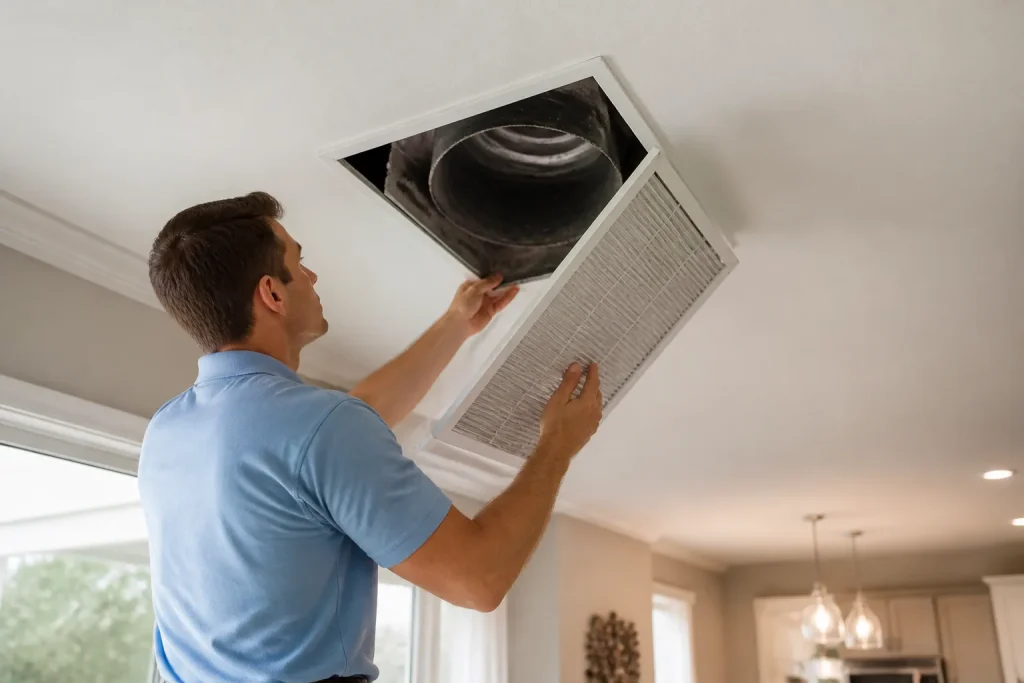
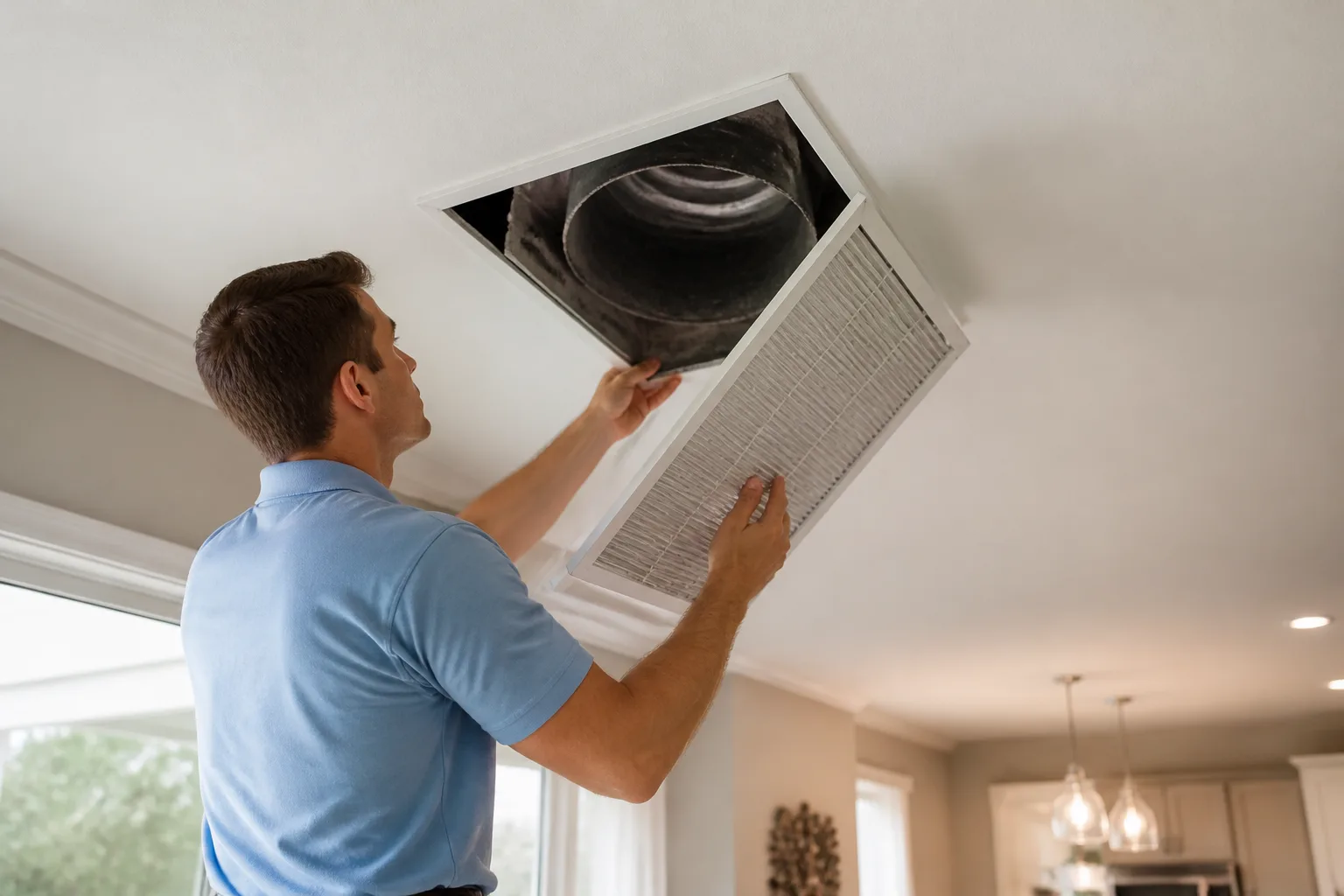
A camera inspection shows you the inside of the duct, in color, before anyone runs a brush through it. That matters because the interior surface tells you whether cleaning will help or hurt. Skipping the camera and going straight to cleaning is how homeowners end up paying for a service that damages compromised liner material and pushes debris further into the system.
When we run an Air Duct Cleaning Brier Creek diagnostic, we’re looking for specific findings:
- Liner condition. Is the interior surface still bonded, or is it flaking and separating? Flaking means replacement.
- Junction integrity. Are the connections sealed, or is air escaping at every joint? Leaks can often be sealed.
- Moisture evidence. Staining, rust, or active condensation points to a moisture problem that must be solved before any cleaning or sealing.
- Contamination type. Dust and debris are cleanable. Mold growth or rodent contamination changes the scope.
Here’s the honest part: a camera inspection takes time and costs more than a quote over the phone. It’s also the only way to know whether you’re buying a $400 cleaning or a $3,000 partial replacement. The phone quote isn’t cheaper. It’s just less informed.
How Duct Leakage Testing Maps to the Repair-or-Replace Threshold
Duct leakage testing pressurizes the system and measures how much air escapes before it reaches your rooms. The result is a percentage: how much of your system’s airflow is being lost to leaks. That number is the single most useful data point in the repair-or-replace conversation, because it tells you whether sealing will recover enough performance to justify keeping the existing ducts.
In our experience, the threshold sits roughly here:
- Under about 15% leakage: usually a sealing job. Mechanical sealing or aerosol-based sealing can recover most of that loss.
- 15% to 25% leakage: depends on where the leaks are. Accessible leaks get mechanically sealed. Inaccessible ones may call for aerosol sealing.
- Above 25% leakage, or leaks at collapsed sections: sealing won’t fix a duct that’s physically crushed. That’s replacement territory, at least for the affected sections.
These aren’t hard industry numbers so much as working thresholds we use to frame the conversation. What matters is that the test result is tied to a physical cause. A leak at a joint is a sealing problem. A leak through a collapsed run is a structural problem. Same test, very different fix.
What Sealing Can Fix, and What Needs Physical Access
Sealing and replacement solve different problems, and confusing them is expensive. Sealing fixes leaks: gaps at joints, disconnected runs, unsealed penetrations at the air handler, and small cracks in rigid duct. It works best when the duct is structurally sound but leaky.
Replacement handles what sealing can’t reach. A collapsed flex run, a torn liner, a duct crushed behind a finished wall, or moisture damage that’s compromised the material itself, none of that gets fixed by injecting sealant. It requires physical access, cutting in, and replacing the affected sections.
This is why we treat duct repair and sealing as a core part of the work, not an upsell. The phrase we use internally is “seal the leaks, not just clean the ducts,” because cleaning a leaky system leaves the performance problem untouched. You get clean ducts that still lose a quarter of their air before it reaches the bedroom.
On systems where the ductwork is sound but the filtration side needs attention, we also install and service Honeywell and Aprilaire air quality systems, which lets us handle the full system from intake to output in a single visit rather than sending you to a separate contractor.
When Partial Replacement Plus Sealing Beats Whole-System Replacement
Whole-system replacement is rarely the right first move. In most Brier Creek homes we assess, the compromised sections are localized: a bad run in the attic, a crushed trunk, a section of pre-2000 flex that’s reached the end of its service life. Replacing those sections and sealing the rest is typically far less expensive than tearing out a system where 70% of the ductwork is still sound.
Here’s how the cost math usually shakes out, in relative terms rather than exact dollars, since every system is different:
- Cleaning only: lowest cost, but only appropriate when the ducts are sound and just dirty
- Partial replacement plus sealing: mid-range, appropriate when specific sections have failed but the rest is serviceable
- Whole-system replacement: highest cost, reserved for systems where the majority of the ductwork has structural or material failure
The way to identify which sections are compromised is the camera inspection plus leakage test, run section by section. That’s how you learn whether you’re replacing one run or the whole trunk. It’s also how you avoid replacing good ductwork because the bad section was the only one anyone looked at.
When to Call a Pro (and What to Mention)
If you’ve noticed musty odors returning within months of a cleaning, visible sagging in attic duct runs, condensation on duct surfaces, or a persistent imbalance where some rooms never get comfortable, those are the signals that a diagnostic visit makes sense before you book anything else.
The conversation starts with a camera inspection and a leakage test, not a cleaning appointment. If the ducts pass, you clean and move on. If they don’t, you know exactly which sections need attention and why. Our technicians have up to 12 years of experience reading those results, and the written estimate sets the final price before any work starts.
Related services in Brier Creek: if the diagnosis points to the full system rather than the ducts alone, we also handle HVAC cleaning and dryer vent cleaning, and a routine air duct cleaning is the right starting point for a system that passes inspection.
One small note on timing: the ducts don’t care that you’ve been putting this off since spring. They’ll wait. Your allergies might not.
The Bottom Line
The repair-or-replace decision on ductwork comes down to three findings: material condition, structural integrity, and measured leakage. If the liner is degrading, the ducts are collapsed somewhere, or moisture has compromised the material, cleaning is a temporary fix at best. If the ducts are structurally sound but leaky, sealing is the answer. And if they’re sound and just dirty, a straight cleaning is all you need.
You can only tell the difference with a camera inspection and a leakage test run before the cleaning crew arrives, not after. That sequencing is the whole point.
If you’re in Brier Creek and need help figuring out which situation you’re in, Air Duct Cleaning Brier Creek offers free estimates. Call (833) 509-3460. We answer 24/7. Fast dispatch from 7am to 7pm, Sunday through Friday.
Frequently Asked Questions
You only need to replace ducts when the material or structure has failed: degraded inner liner, collapsed runs, or moisture damage. Leaks at joints and connections can usually be sealed. A camera inspection and leakage test will tell you which situation you’re in. Call (833) 509-3460 for a free estimate and a straight answer.
Yes. If the inner liner is already shedding, contact cleaning agitates it and can push fibers downstream into your living space. That’s why we run a camera inspection before any cleaning on older flex duct, particularly pre-2000 installations. Call (833) 509-3460 and we’ll check the liner condition before recommending a cleaning.
There’s no universal number, but as a working threshold we treat leakage above roughly 25% as a sign that sealing alone won’t recover enough performance, especially if the leaks sit at collapsed sections. Below 15%, sealing usually handles it. Call (833) 509-3460 and we’ll test your system and explain what the result means for your home.
Usually yes, and by a wide margin. Most homes have a few compromised sections surrounded by ductwork that’s still serviceable. Replacing those sections and sealing the rest costs far less than a full tear-out. A written estimate after inspection sets the final price. Call (833) 509-3460 to schedule one.
Written by the team at Air Duct Cleaning Brier Creek.
Need Air Duct Cleaning Help?
Call Air Duct Cleaning Brier Creek - the local pro we connect you with is licensed and insured, here with fast help in Brier Creek.
(833) 509-3460