
Last updated November 23, 2026
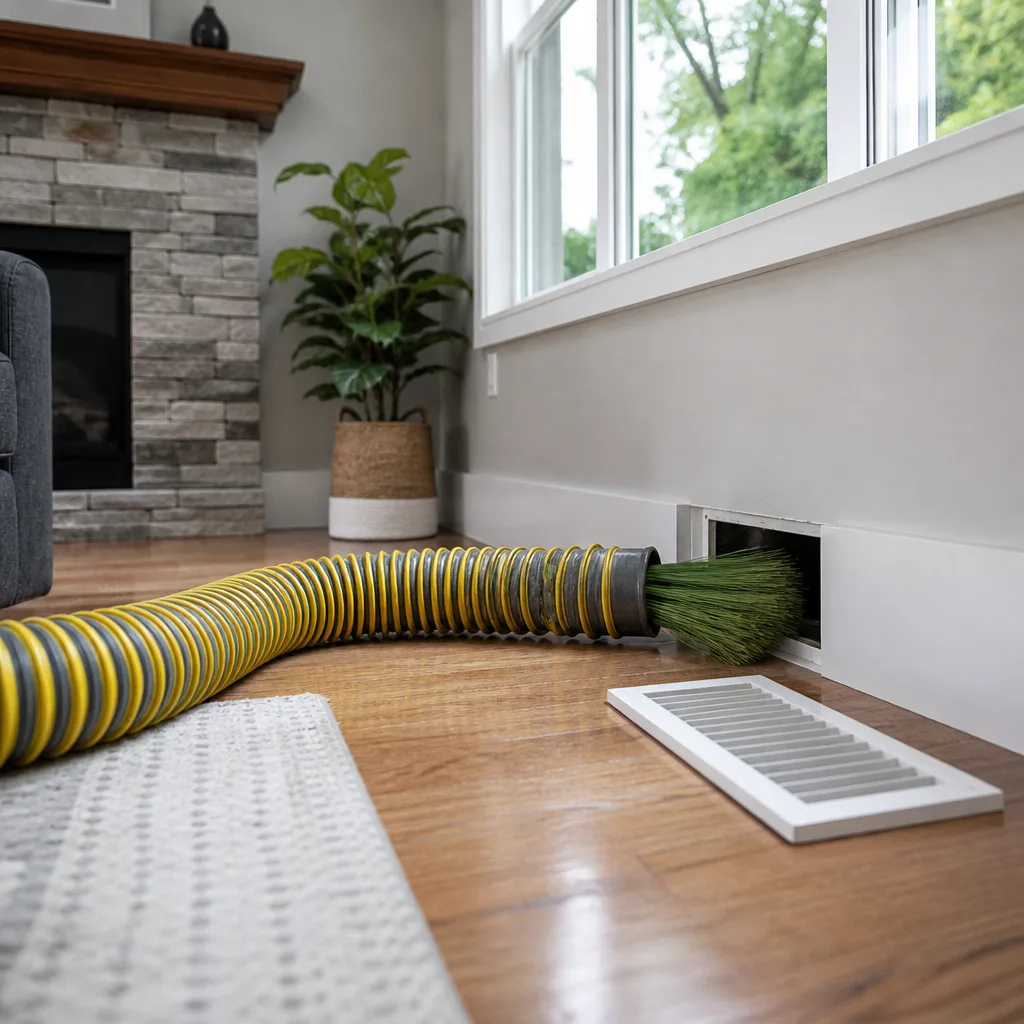 Whole-home duct cleaning
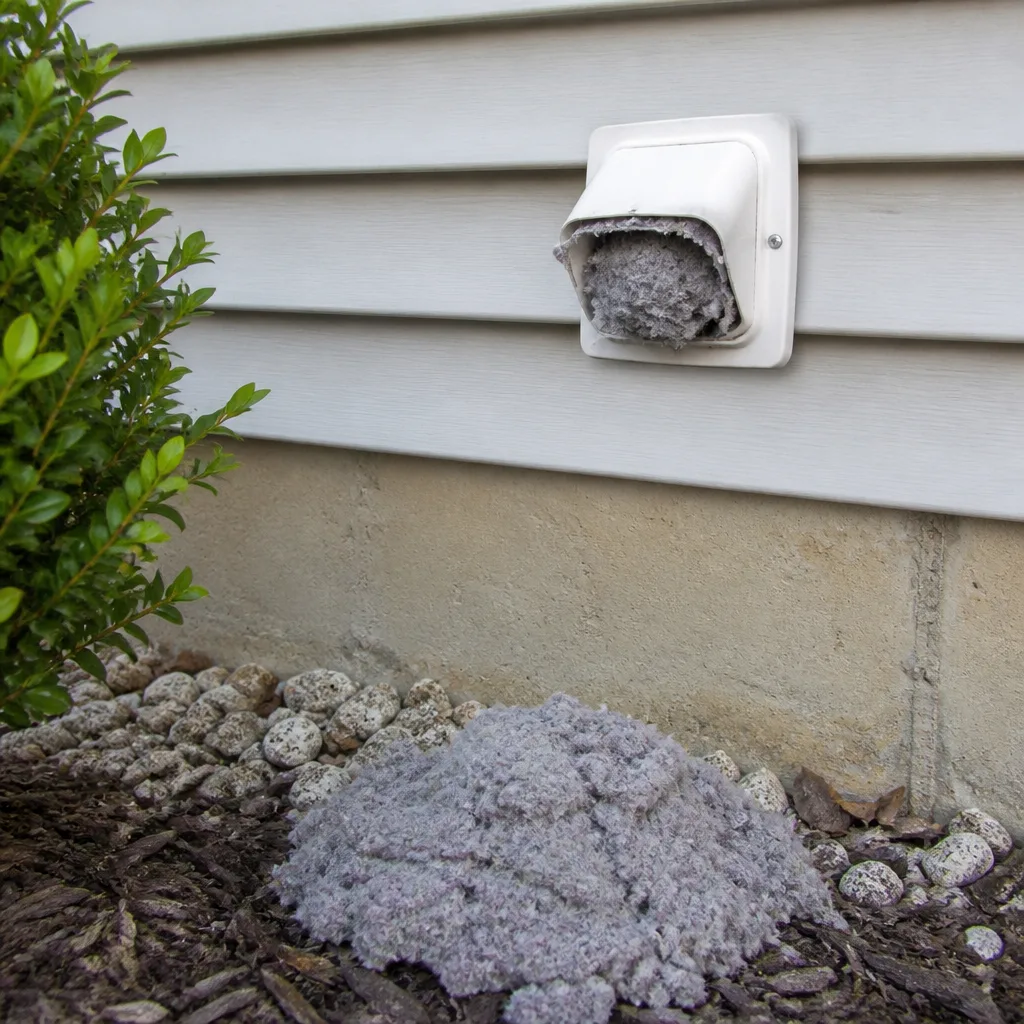 Dryer vent cleaning
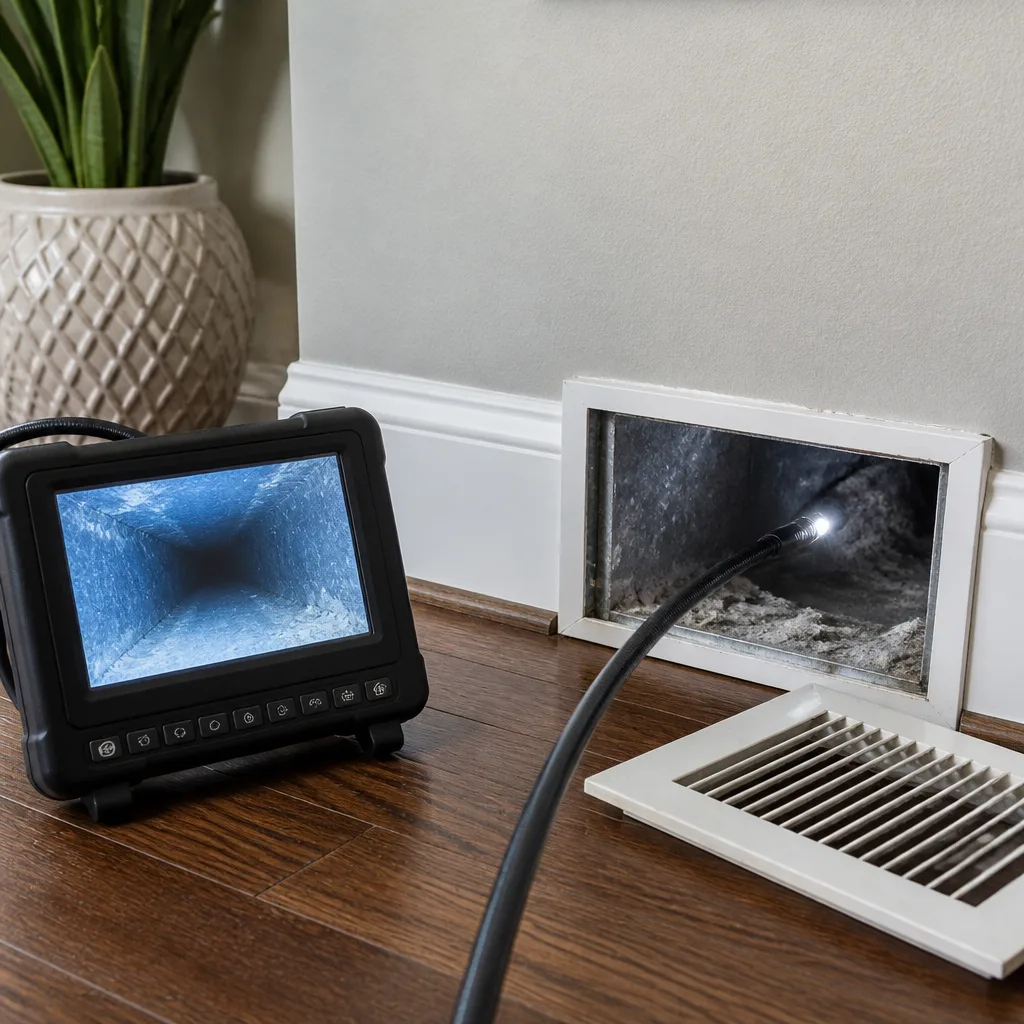 Camera inspection
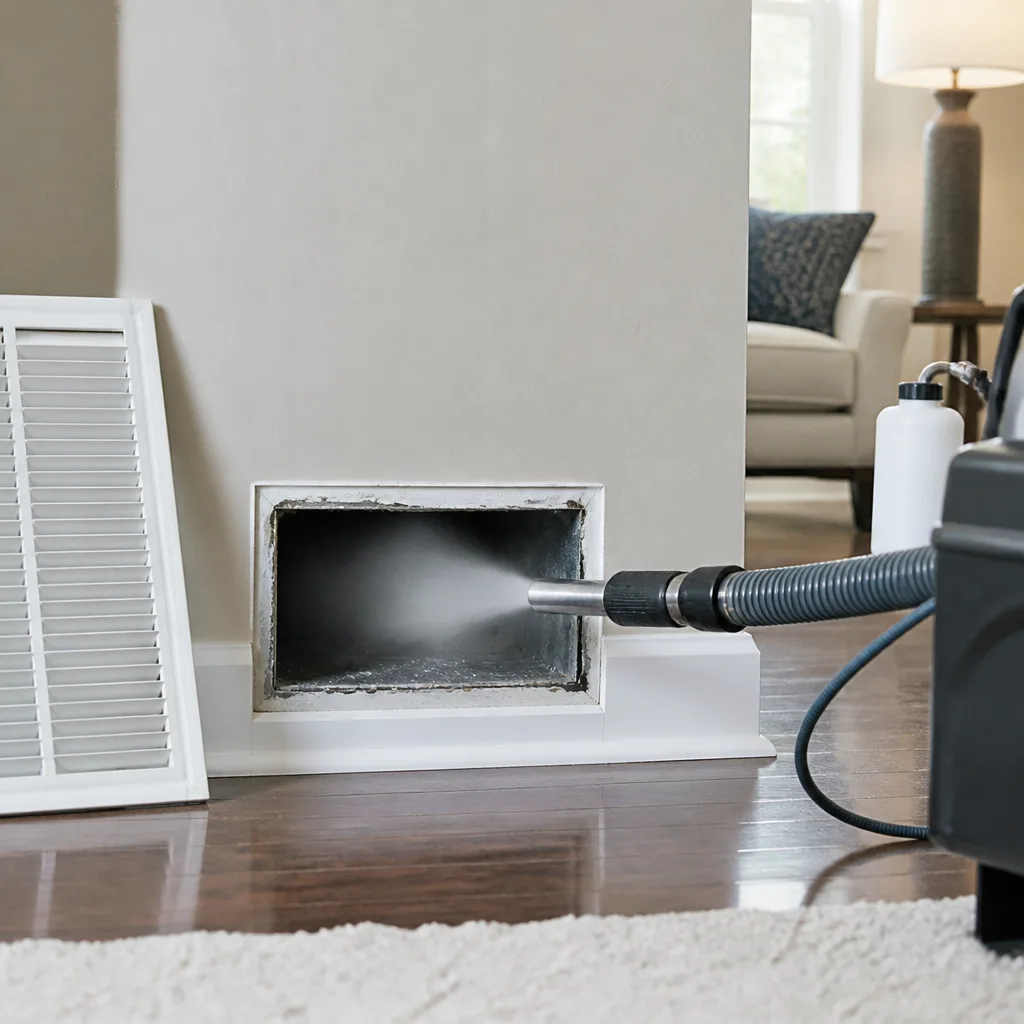 Sanitizing & deodorizing
Whole-system duct and dryer vent check with before-and-after photos - you see exactly what came out of your vents
That "$99 whole-house special" is a bait ad - the real number appears once they are in your hallway, or the "clean" is a shop-vac at the register. We photograph the inside of your ducts before and after instead.
Air Duct Cleaning Warning Signs: A Brier Creek Homeowner’s Reference Guide
A musty smell when the HVAC kicks on is almost universally described as “just the system starting up.” It isn’t. That odor is microbial off-gassing from biological growth on the evaporator coil or in duct liner material, and it doesn’t fade on its own. The system running harder to compensate doesn’t fix it; it distributes it through every room the ducts reach. Homeowners in Brier Creek see this misread constantly, along with weak registers blamed on the thermostat and dust rings blamed on the vacuum. This guide translates the specific symptoms you can observe into the duct conditions they actually point to, so you can triage accurately instead of waiting for a small problem to become a structural one.
Quick Answer
The core warning signs of dirty air ducts are a musty smell that appears when the HVAC starts, uneven airflow between rooms, visible dust rings around supply registers, dark streaking on walls near returns, and allergy-type symptoms that track with heating and cooling cycles. Any one of these points to a specific duct or coil condition worth diagnosing; two or more together usually means the system needs a full cleaning, not a spot treatment.
Styles & brands we work with
- Whole-home duct cleaning
- Dryer vent cleaning
- Camera inspection
- Sanitizing & deodorizing
Table of Contents
- The Smell Index: What Each Odor Tells You
- Decoding Airflow Symptoms Room by Room
- What Visible Indicators at the Registers Mean
- Health Patterns Worth Taking Seriously
- What to Do Immediately vs. What to Monitor
- Why Consumer Vacuums Fall Short
- Common Mistakes to Avoid
- Frequently Asked Questions
The Smell Index: What Each Odor Tells You
Odors are the most ignored and most diagnostic warning sign a duct system produces. The mistake is treating every smell as one problem. Each odor category points to a different failure, and each needs a different service response.
- Musty, damp, or earthy smell when the fan starts: this is microbial off-gassing from biological growth on the evaporator coil or inside duct liner material. It’s the signature of moisture sitting where it shouldn’t. The fix is cleaning plus addressing the moisture source, and often sanitizing the system with air-purification-grade filtration equipment.
- Burning dust smell at the start of a heating cycle: settled dust is burning off the heat exchanger. A thin layer is normal for the first light of the season; a smell that returns every cycle or gets stronger is not, and it deserves a technician’s inspection.
- Chemical or solvent odor: off-gassing from VOC-contaminated ductwork, often from new finishes, adhesives, or stored chemicals whose fumes the return pulled in and the liner absorbed. Cleaning alone may not clear it; the duct interior may need treatment.
- Stale, “old house” smell that improves when windows are open: a sign that the air handling pathway itself is the source, not the room contents.
In Brier Creek’s humid summers, the musty category shows up often. Condensate management matters here because the cooling season runs long and coils stay wet for months. If a musty smell appears each time the AC cycles on, damp duct liner or a fouled coil is the likeliest cause, and it won’t clear with air fresheners or filters alone.
Decoding Airflow Symptoms Room by Room
Weak or uneven airflow gets blamed on the thermostat, the filter, or “the way this house is.” Sometimes it’s one of those. Often it’s a duct problem, and which problem depends on the pattern.
- One room never reaches setpoint, others are fine: that branch is usually blocked, kinked, or undersized. A visual inspection of the run is the first step.
- All rooms weak, fan running normally: this points to leakage or a partial disconnect somewhere in the trunk line, so conditioned air is escaping into a crawlspace, attic, or wall cavity instead of reaching the registers.
- Noticeably higher energy bills with no change in habits: the system is running longer to compensate for air it’s losing before it reaches your rooms. Leaky ducts are a common cause.
- Whistling or whooshing at a register: pressure imbalance from a restriction or a badly sealed connection.
The distinction matters because cleaning and sealing are different services. Cleaning removes debris from inside the duct walls. Sealing closes the leaks and reconnects the runs so the air actually arrives. A system that has both problems needs both fixes, and the full-system approach covers the whole air pathway from intake to output rather than just the visible vents. For Brier Creek homes with ducts routed through unconditioned attic space, leak-related air loss is especially worth checking, since attic temperatures push hard against the supply air in both summer and winter.
What Visible Indicators at the Registers Mean
Registers are the only part of the duct system most homeowners can see, and they’re surprisingly informative.
- Dust rings around supply grilles: the ring forms where air escapes the seal between the boot and the drywall, carrying dust that settles on the surrounding surface. A faint ring is common; a dark, defined ring suggests a persistent leak at that connection.
- Black streaking on walls or ceiling near returns: air moving through a poorly sealed return pulls dust and, in some cases, soot-laden air past the wall surface and deposits it over time. It’s a sign of leakage at the return side.
- Debris accumulation on the grille face: tells you little about the duct interior by itself, but combined with a smell or airflow complaint it raises the odds the interior is loaded.
- Visible dust plumes when the fan starts: debris is being disturbed and redistributed every cycle.
When we inspect a system with contact-cleaning equipment like the Rotobrush, we agitate and extract debris directly from the duct walls, so the before-and-after condition of the interior is documented. That’s the honest way to know how contaminated a system was. Surface dust at the grille is a clue, not a verdict, and a firm that judges your ducts from the register alone is guessing.
Health Patterns Worth Taking Seriously
The most useful health signal isn’t the symptom itself; it’s the timing. Symptoms that track with HVAC cycles are diagnostic in a way that symptoms occurring randomly are not.
If sneezing, eye irritation, or headaches improve when windows are open and worsen when the system runs, the air handling system is a plausible contributor. The same pattern applies to symptoms that show up shortly after the heat or AC kicks on, or that are better in some rooms than others. This isn’t a medical diagnosis, and it isn’t proof of anything on its own. It’s a signal worth investigating, and it’s the kind of signal a full cleaning and sanitizing service can address at the source by removing the debris and biological growth that gets pushed into living space.
For households with allergies or respiratory sensitivities, and for property managers in Brier Creek responsible for multiple units, tracking symptom timing against HVAC cycles for a few weeks is genuinely useful. It separates a duct problem from an unrelated one before anyone spends money. When the pattern is consistent, the next step is a duct inspection, not another filter upgrade.
What to Do Immediately vs. What to Monitor
Not every warning sign is urgent, and treating them all the same wastes time and money. Here’s a practical triage framework.
Act now (treat as urgent)
- Visible mold on any duct surface, register, or surrounding material.
- Standing water or persistent moisture inside a duct, or water staining near one.
- A burning smell that recurs with every heating cycle.
- Rodent droppings, nesting material, or a pest infestation inside the duct system.
- A duct that has come fully disconnected and is dumping conditioned air into a crawlspace or attic.
Schedule within the next few weeks
- A persistent musty smell that hasn’t cleared after a filter change.
- Uneven airflow or a room that never reaches setpoint.
- Dust rings or wall streaking that have gotten more pronounced.
- Rising energy bills with no other explanation.
Monitor and reassess
- Occasional dust at a register with no smell or airflow complaint.
- Mild symptoms that don’t clearly track with system cycles.
- A faint dust ring that hasn’t changed since you noticed it.
Documenting what you see, when you see it, and in which rooms gives a technician far more to work with than a vague description. Photographs of registers and a simple log of symptom timing cost nothing and make the diagnosis faster.
Why Consumer Vacuums Fall Short
A shop vac at the register can pull some surface dust, but it can’t reach the length of the duct, it can’t agitate debris off the duct walls, and it can’t extract what it loosens without a sealed, high-capacity negative-pressure setup. In some cases it makes things worse by stirring settled debris into the airstream.
Professional cleaning uses extraction equipment capable of maintaining negative pressure inside the duct while a contact tool agitates the interior surfaces. The Rotobrush is the industry benchmark for that physical contact cleaning, and Nikro extraction equipment is the same class of tooling used by commercial restoration and remediation contractors. When a system also needs air quality improvement, Abatement Technologies equipment brings air-purification-grade filtration to the job. At the end, the before-and-after condition of the duct interior should be visible to you, not just claimed.
If your system uses a media or electronic filter setup, homes running Honeywell or Aprilaire systems benefit from cleaning and filtration service being handled together, so the air quality component and the duct itself are addressed as one system rather than two disconnected jobs.
Common Mistakes to Avoid
- Assuming the smell is “just the system starting up.” A musty odor on startup is a moisture and growth signal, and it won’t clear without addressing the source.
- Blame everything on the thermostat. Uneven airflow across rooms usually points to a duct problem, not a control problem, and swapping thermostats won’t fix a leaking or blocked run.
- Judge duct condition from the register alone. Surface dust tells you little about the interior. A proper inspection is the only honest way to know how contaminated the system is.
- Clean without fixing leaks. Cleaning a leaking system leaves it leaking. Sealing the leaks is what keeps the air where it belongs after the cleaning is done.
- Ignore moisture in a humid climate. In Brier Creek’s long cooling season, damp duct liner and fouled coils are a recurring cause of odor and airflow complaints. Moisture has to be addressed, not masked.
- Skip the dryer vent. A clogged dryer vent is a fire risk and a separate check from the HVAC ductwork. It deserves its own inspection.
- Hire based on a per-vent pitch. A price quoted per vent encourages a partial job. Ask for a whole-system scope, with a clear description of what will be cleaned and how it will be documented.
See the difference
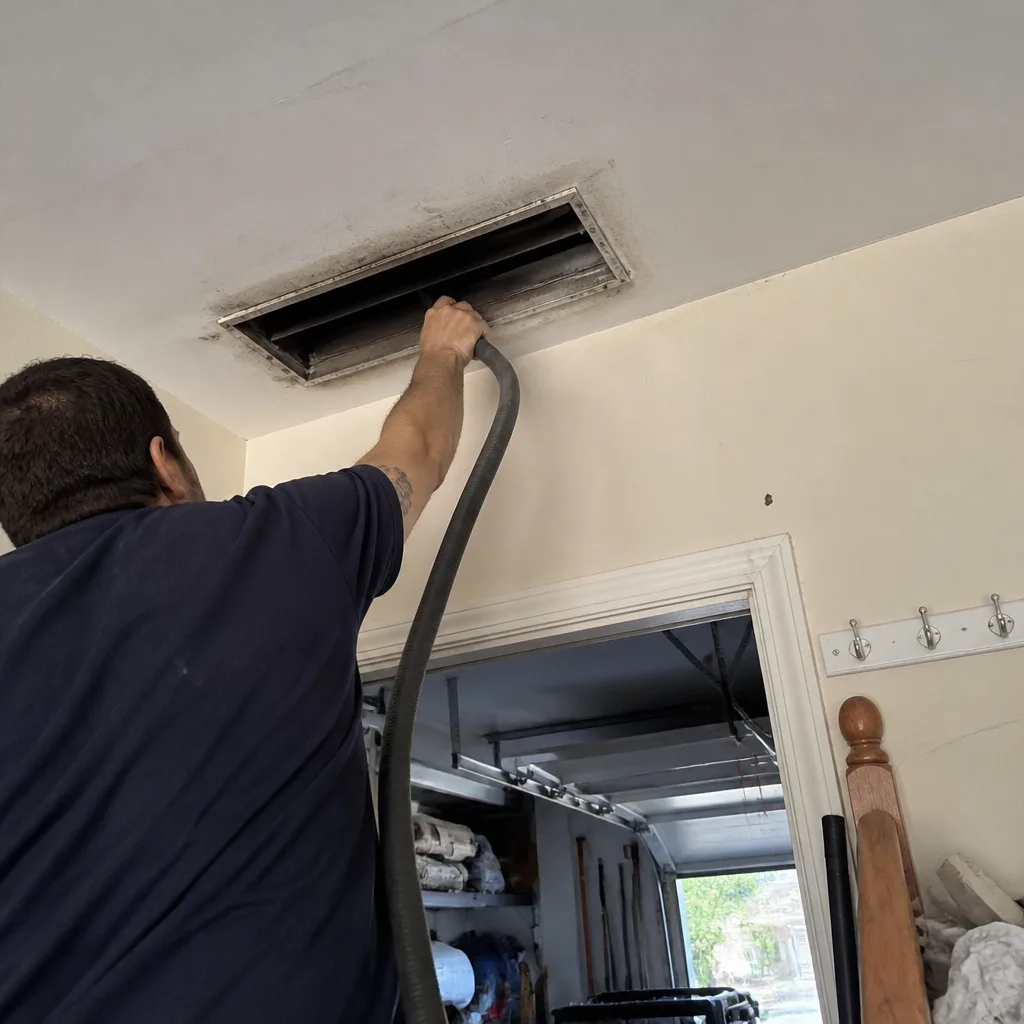 Before
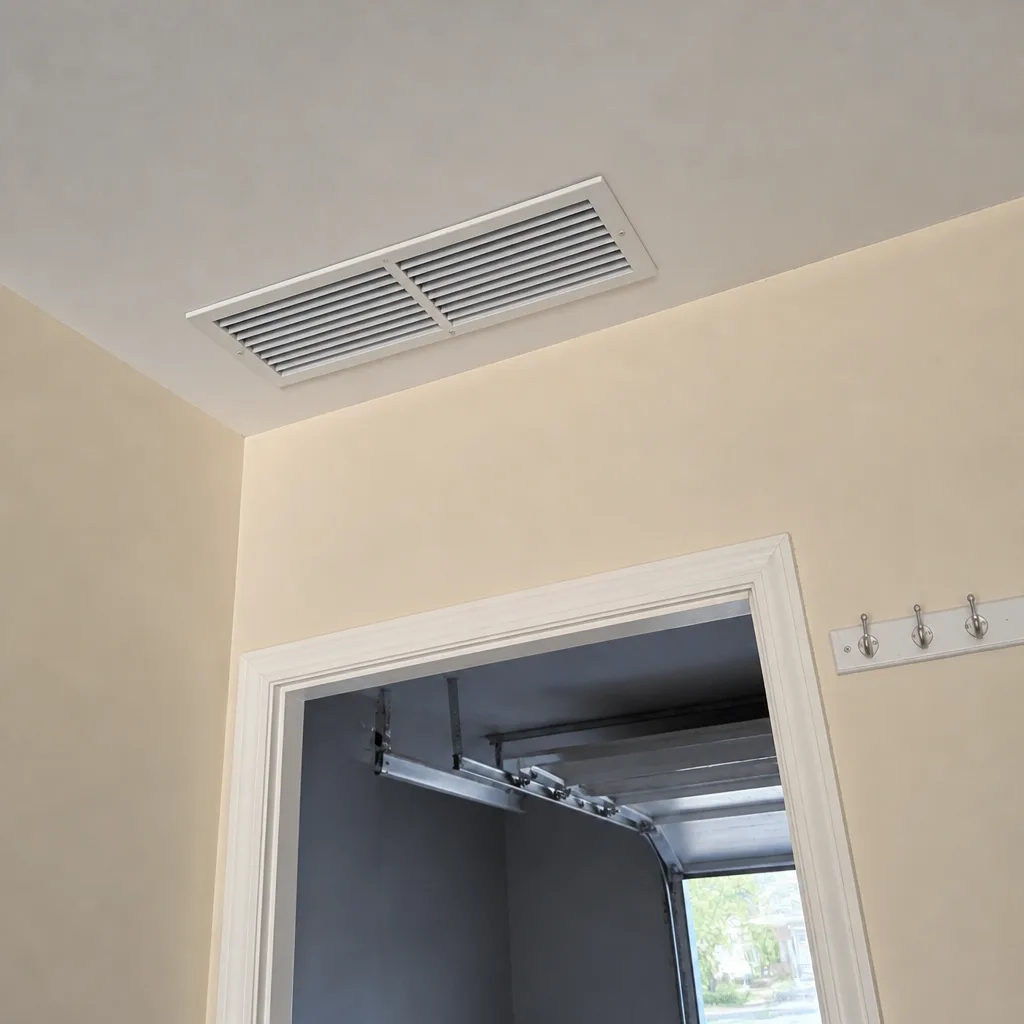 After
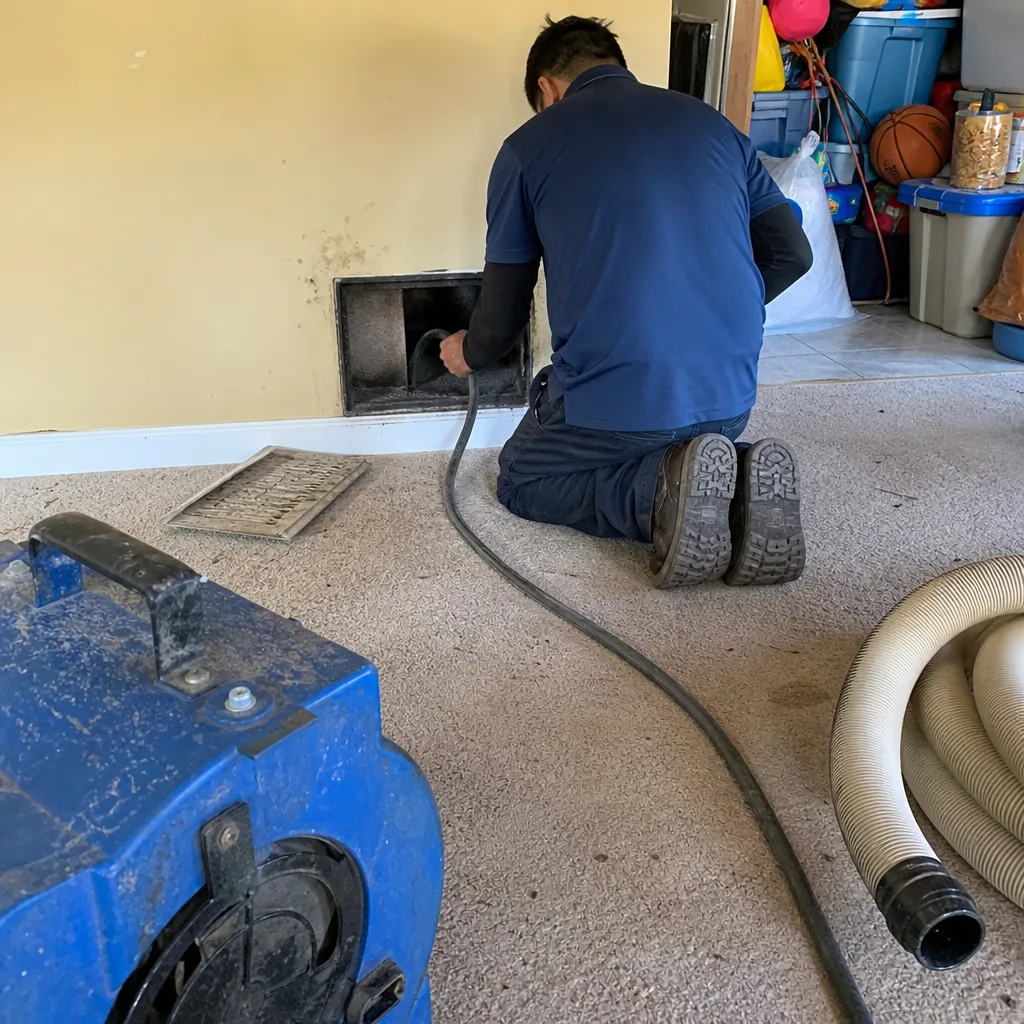 Before
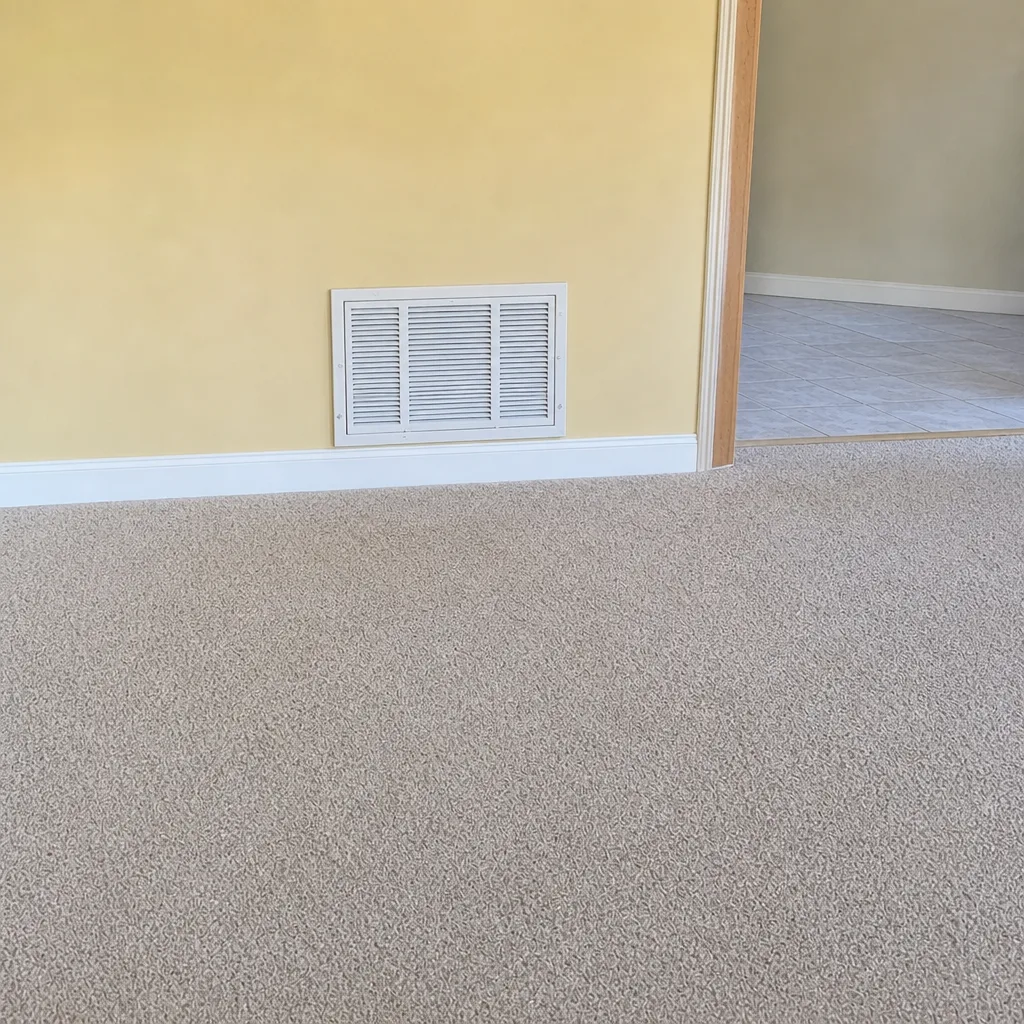 After
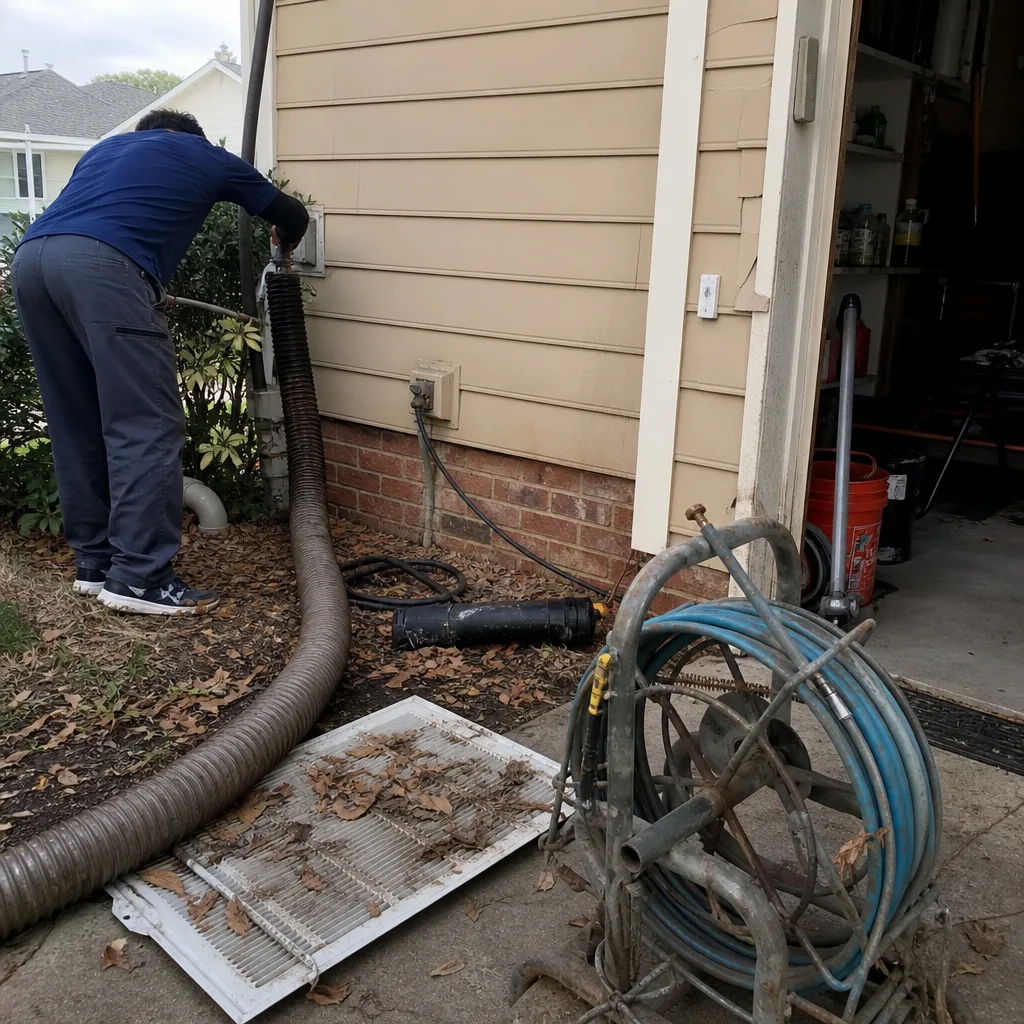 Before
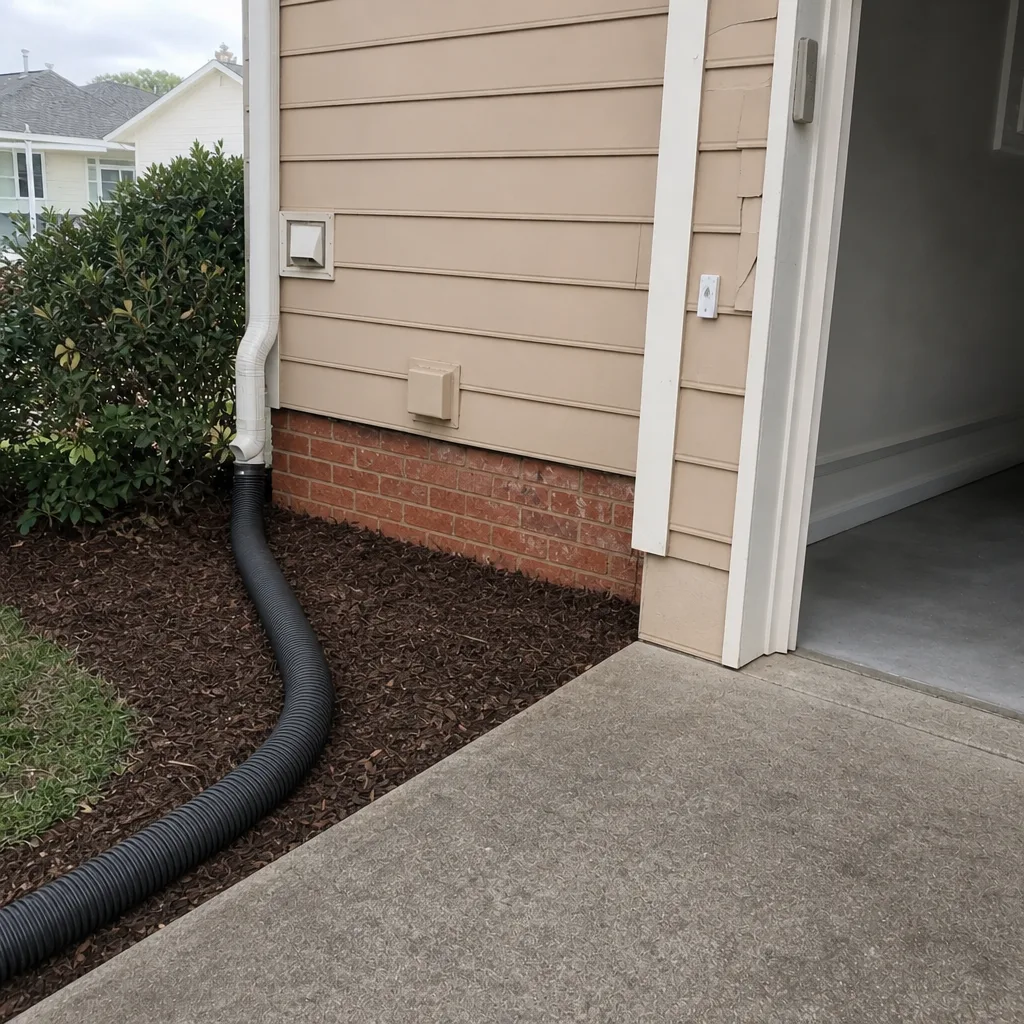 After
When to Call a Professional
Call a professional when a warning sign has persisted for more than a couple of weeks, when two or more signs show up together, or when anything on the urgent list appears. Visible mold, water in the ducts, a recurring burning smell, or a disconnected run should be handled by a trained technician, not monitored. If you’re a property manager in Brier Creek with multiple units showing the same musty smell or uneven airflow, a system-level inspection is more efficient than dealing with each unit reactively. Air Duct Cleaning Brier Creek offers free estimates in Brier Creek. Call (833) 509-3460. We answer 24/7. Fast dispatch from 7am to 7pm, Sunday through Friday. The team also handles dryer vent cleaning and HVAC cleaning when the warning signs point beyond the ducts.
Frequently Asked Questions
A musty smell that appears whenever the HVAC starts is the most reliable single sign, because it points directly to biological growth on the coil or in the duct liner. Uneven airflow and dust rings are useful, but they can have other causes. Call (833) 509-3460 for an exact quote; estimates are free.
Most Brier Creek homes don’t need a fixed schedule; they need cleaning when a warning sign appears, such as a persistent smell, visible growth, a pest issue, or a major renovation. Homes with allergies, pets, or heavy dust loads tend to need it sooner. Call (833) 509-3460 for an exact quote; estimates are free.
Dirty ducts can circulate dust and biological material that aggravates allergy-type symptoms, especially when symptoms track with HVAC cycles and improve with windows open. It’s a signal worth investigating, not a diagnosis. Call (833) 509-3460 for an exact quote; estimates are free.
Low quotes often cover only a surface pass at the registers, without contact cleaning inside the duct walls or extraction under negative pressure. The price is set per job by the written estimate, so ask what equipment and scope are included before comparing numbers. Call (833) 509-3460 for an exact quote; estimates are free.
You should be shown before-and-after documentation of the duct interior, not just told the job was finished. Contact cleaning with professional extraction equipment makes the difference visible. Call (833) 509-3460 for an exact quote; estimates are free.
A musty smell means moisture and likely biological growth somewhere in the system, so it should be investigated rather than ignored. Left alone, it tends to spread through the cooling cycle and worsen. Call (833) 509-3460 for an exact quote; estimates are free.
The Bottom Line
The warning signs of a contaminated duct system are observable and specific, and each maps to a particular condition: musty smells to coil and liner growth, weak airflow to blockage or leakage, register dust rings to seal failures, and symptom timing to the air pathway. Reading them correctly is what separates a smart service decision from an expensive one. Cleaning with professional-grade equipment removes the debris, sealing closes the leaks, and documentation shows you what was there before and after. The team at Air Duct Cleaning Brier Creek covers air duct cleaning and Air Duct Cleaning Brier Creek across the full system, and our technicians have up to 12 years of experience.
Call (833) 509-3460 for a free estimate. We answer 24/7. Fast dispatch from 7am to 7pm, Sunday through Friday. Every job is priced per system by written estimate, agreed before work starts.
Written by the team at Air Duct Cleaning Brier Creek.