
Last updated November 23, 2026
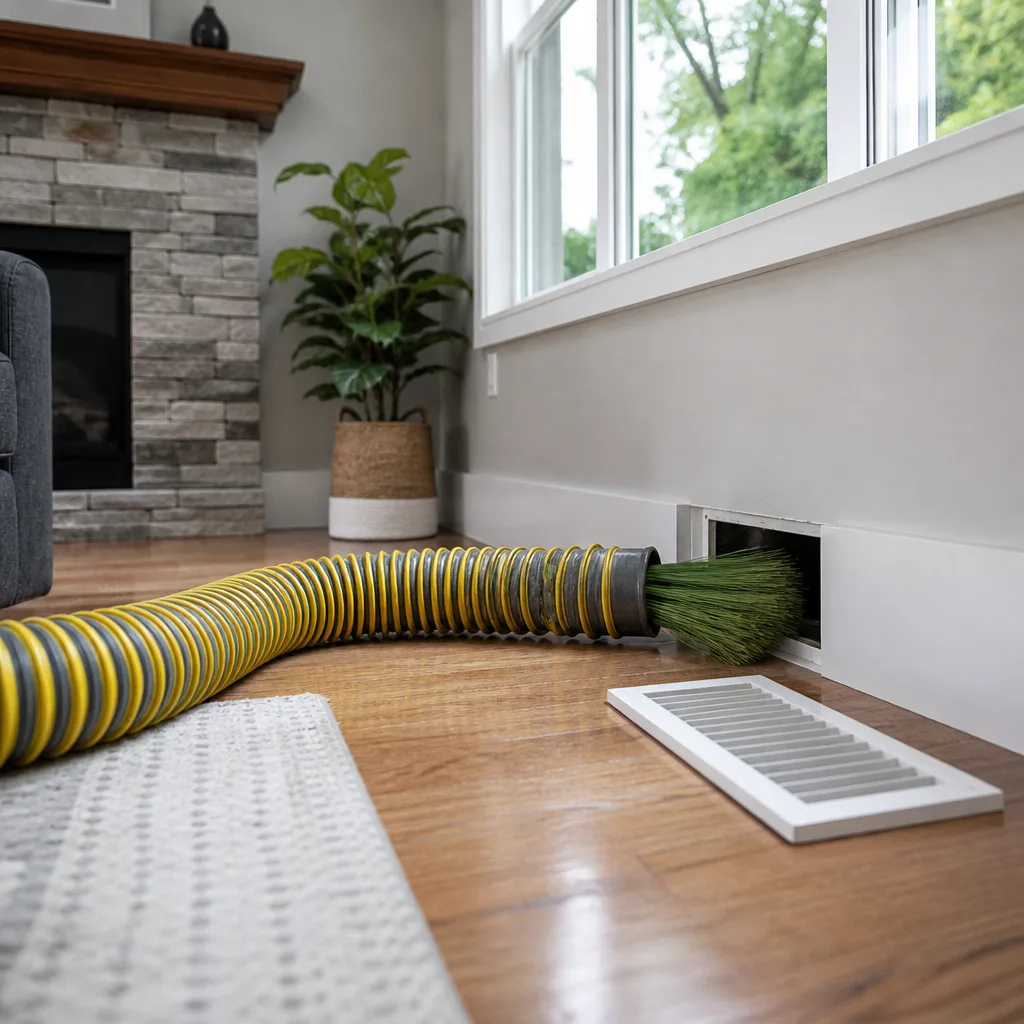 Whole-home duct cleaning
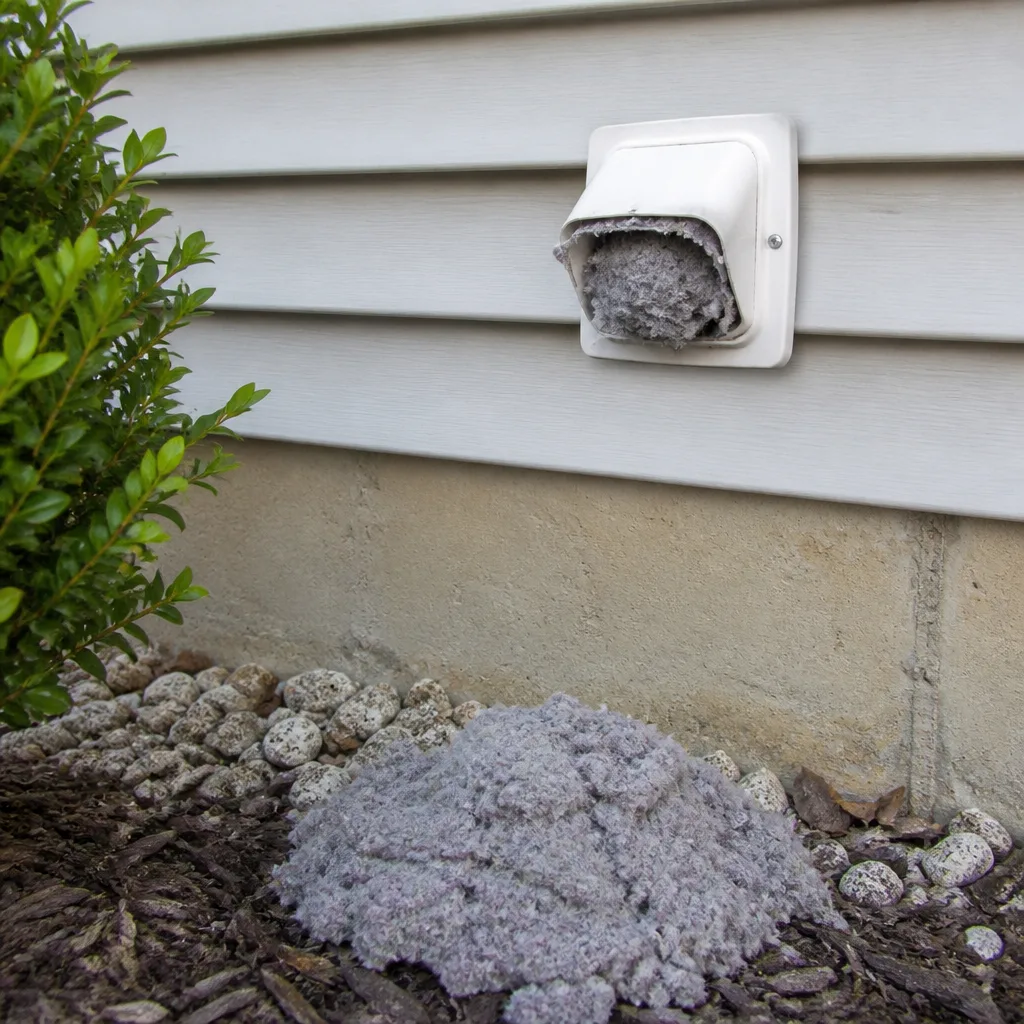 Dryer vent cleaning
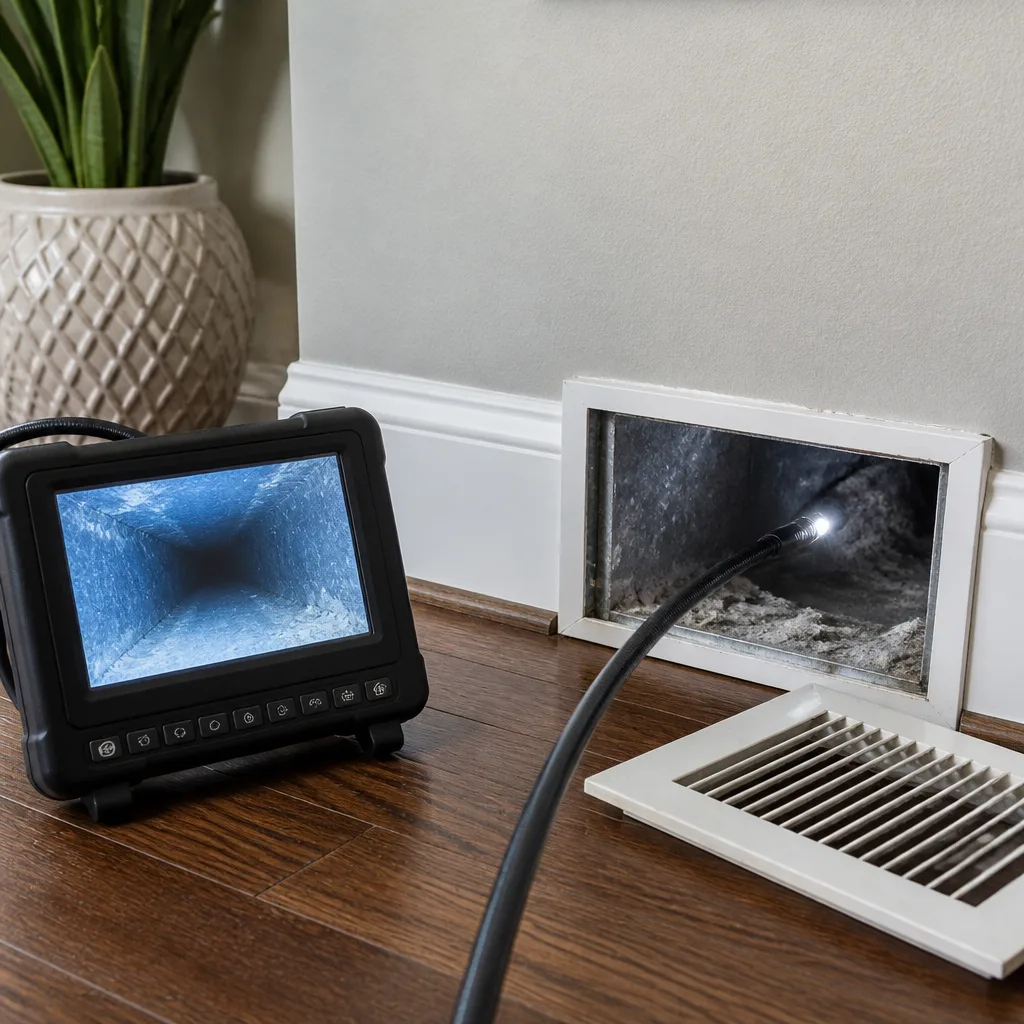 Camera inspection
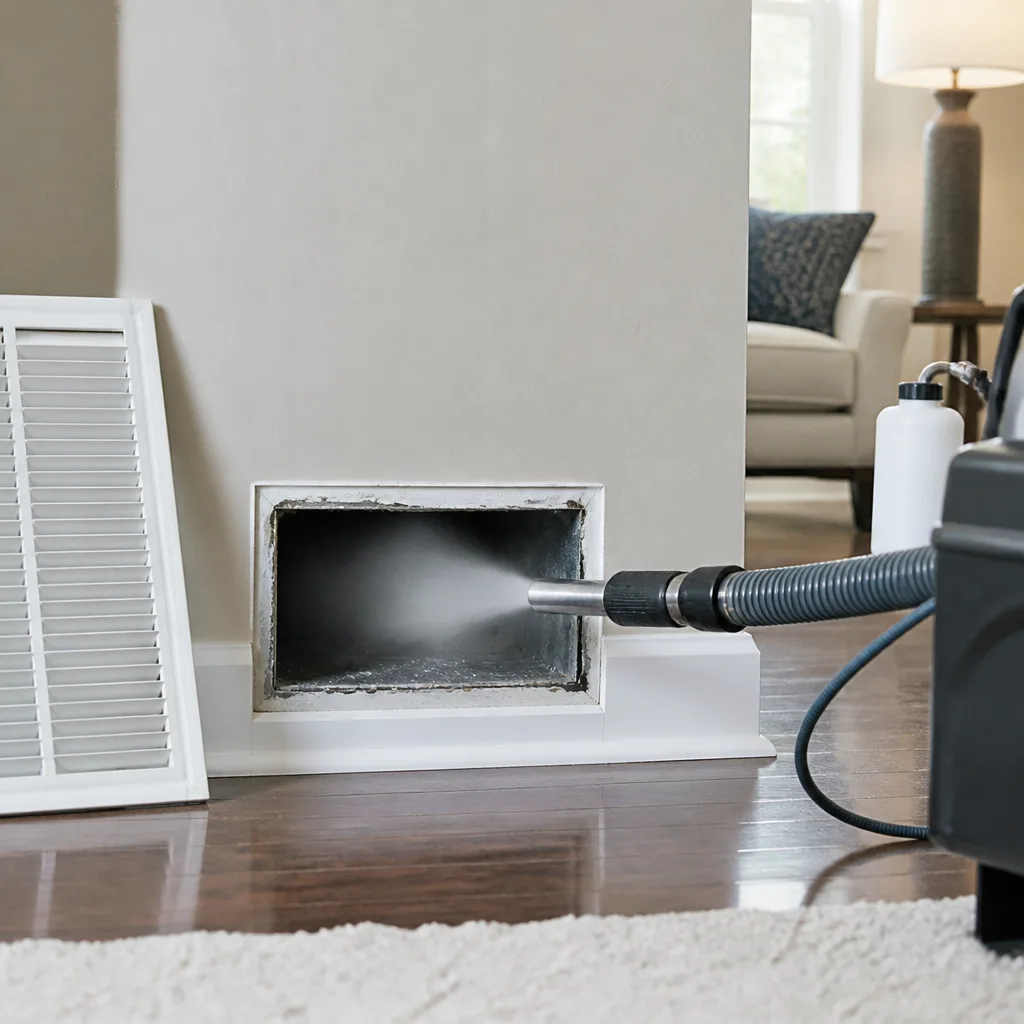 Sanitizing & deodorizing
Whole-system duct and dryer vent check with before-and-after photos - you see exactly what came out of your vents
That "$99 whole-house special" is a bait ad - the real number appears once they are in your hallway, or the "clean" is a shop-vac at the register. We photograph the inside of your ducts before and after instead.
DIY vs Professional Air Duct Cleaning: The Brier Creek Homeowner’s Decision Guide
The most honest thing we can say about DIY air duct cleaning is this: a shop vac at a register opening creates no meaningful negative pressure in the duct system behind it, so debris beyond the visible section of the duct stays exactly where it is. That’s not a failure of effort. It’s a physics problem. A homeowner with good tools and real patience can keep registers, grilles, filters, and filter housings clean, and can absolutely maintain a dryer vent. What that same homeowner cannot do is pull settled debris out of a trunk line running through a hot Brier Creek attic. This guide maps which tasks are genuinely worth doing yourself and which ones need professional equipment to accomplish anything real.
Quick Answer
DIY air duct cleaning works for surface-level maintenance: registers, grilles, accessible duct sections, filter changes, and dryer vent upkeep. Professional cleaning is the right call when debris has settled inside trunk lines, when coils need cleaning, when flex duct is inaccessible, or when there’s biological contamination. The dividing line isn’t effort or tool quality at the register. It’s whether the equipment can generate enough negative pressure and agitation to move debris through the whole system, which consumer vacuums cannot do.
Styles & brands we work with
- Whole-home duct cleaning
- Dryer vent cleaning
- Camera inspection
- Sanitizing & deodorizing
Table of Contents
- What DIY Air Duct Cleaning Can Actually Accomplish
- What DIY Cannot Accomplish, No Matter the Tools
- The Equipment Threshold That Separates Real Cleaning From a Vacuum Pass
- How a Professional Duct Cleaning Job Actually Runs
- Cost-Benefit Framing for Brier Creek Homes
- The Decision Matrix: When DIY Is Enough and When It Isn’t
- Brier Creek Factors That Change the Answer
- A Realistic Maintenance Schedule
What DIY Air Duct Cleaning Can Actually Accomplish
DIY duct maintenance is legitimate work, and we’d rather you do it well than skip it entirely. Several tasks are genuinely within reach of a homeowner with basic tools, and doing them consistently does extend the time between professional cleanings.
Here’s what’s realistically in scope:
- Register and grille cleaning. Remove each supply and return grille, wash it in a sink or tub with mild soap, dry it fully, and reinstall. This removes dust, pet hair, and pollen that collect on the face of the grille and get blown back into the room every time the system runs.
- Accessible duct section wipe-down. The first foot or so inside a register boot, and any exposed duct run in a garage or basement, can be wiped down with a damp cloth. You’re removing what’s visible and reachable, which is a real improvement to that section.
- Filter replacement and filter housing cleaning. A clogged filter is the single most common cause of reduced airflow in a Brier Creek home. Swap it on schedule and vacuum out the filter housing so the new filter seats against clean metal rather than a mat of old dust.
- Return air grille and plenum surface cleaning. The return side pulls in far more debris than the supply side, and the surfaces just behind the return grille are usually reachable with a vacuum brush attachment.
- Dryer vent maintenance with a proper brush kit. A flexible dryer vent brush kit used from the outside vent and the dryer connection point removes lint buildup along the run. This one matters for fire safety, not just airflow.
These tasks take a Saturday afternoon twice a year. Done consistently, they hold down the visible dust load and keep the system breathing. What they don’t do is reach the debris that has settled deep in the system.
What DIY Cannot Accomplish, No Matter the Tools
This is where we see the most frustration from homeowners who tried the DIY route first. The effort was real. The result wasn’t there, and the reason is equipment and access, not technique.
Four things are simply out of reach for a consumer setup:
- Negative-pressure extraction of settled debris in trunk lines. Trunk lines are the large ducts that carry air from the furnace or air handler to the branch runs feeding each room. Debris settles along the bottom of these runs. Without a sealed connection and industrial extraction pulling strong negative pressure through the whole system, that material doesn’t move. A shop vac at one register pulls room air through the gap around the hose, not duct air through the trunk.
- Evaporator coil cleaning. The coil sits inside the air handler and is the wettest, most contamination-prone surface in the system. It requires disassembly access, a coil-safe cleaner, and a rinse that doesn’t flood the drain pan. This is a technician task.
- Inaccessible flex duct section clearing. Much of the ductwork in Brier Creek homes runs through unconditioned attic space, behind finished walls, and through tight chases. Reaching it means cutting access points, working with agitation tools on a flexible whip, and resealing the access afterward. That’s a professional scope.
- Biological contamination treatment. If there’s microbial growth in the system, it needs proper containment and a sanitizing process with air-purification-grade equipment. Fogging a hardware-store product into a register doesn’t reach the growth and can add moisture where you don’t want it.
If your concern is musty odor, visible growth, or a family member with respiratory sensitivity, DIY isn’t the answer. Those are the cases where the full-system approach matters.
The Equipment Threshold That Separates Real Cleaning From a Vacuum Pass
Not every “professional” duct cleaning is professional. This is the part most guides skip, and it’s the part that determines whether you got your money’s worth. Three things define the threshold: negative pressure, agitation, and access methodology.
Negative pressure and CFM
A proper job puts the entire duct system under negative pressure with a high-volume extraction unit connected at the main trunk or air handler, then seals the system so air must come in through the registers. That’s what forces debris out of the system and into the collection unit. A portable unit with a small hose dropped into one register at a time doesn’t create that condition. The system stays at neutral pressure and the debris stays put.
Contact agitation
Dust bonds to duct walls. Negative pressure alone pulls loose material; it doesn’t break the bond. That’s what contact agitation tools are for, and it’s why we run Rotobrush contact-cleaning systems: a rotating brush head physically scrubs the duct interior while extraction pulls the loosened debris away. This is the benchmark method, and if a company is only blowing air through the ducts, they’re doing a fraction of the job.
Extraction equipment grade
We use Nikro professional HVAC extraction equipment on every job. This is the same class of equipment commercial restoration and remediation contractors use, which matters because it’s built to sustain the airflow and filtration needed to actually collect what’s loosened rather than redistribute it into living space.
Access methodology
Meaningful cleaning means reaching the trunk lines, branch runs, and the air handler itself. That means cutting and resealing access points where needed, cleaning the blower, cleaning the coil, and using air-purification-grade filtration (we use Abatement Technologies equipment for sanitizing work) where contamination is present. If a quote doesn’t mention the air handler and coil, the scope is incomplete.
One more thing to verify: if a company is offering duct cleaning and also pushing integrated filtration upgrades, they should be able to speak to actual systems. We work with Honeywell and Aprilaire air quality systems, so we can talk through whether a filtration upgrade makes sense alongside the cleaning rather than pitching a product we don’t know.
How a Professional Duct Cleaning Job Actually Runs
Understanding the sequence helps you evaluate a quote. Here’s the process on a typical Brier Creek home, in order:
- Inspection and system mapping. Identify every supply and return, locate the air handler, note any flex duct runs, and check for disconnected sections or crushed duct that would limit cleaning effectiveness.
- Containment setup. Connect the extraction unit to the system and seal openings so the whole system can be put under negative pressure.
- Register-by-register cleaning with contact agitation. Each supply and return is cleaned with the Rotobrush agitation tool while extraction runs, working from the farthest runs back toward the air handler.
- Trunk line and plenum cleaning. The large runs and the plenum get the same agitation-and-extraction treatment, with access points cut where needed.
- Air handler and coil cleaning. Blower wheel, coil, and drain pan are cleaned. This is often where airflow problems actually originate.
- Sanitizing, where warranted. If inspection shows microbial growth or odor, a sanitizing treatment with Guardsman-grade protective treatment is applied after cleaning, not before. Cleaning first is what makes any treatment meaningful.
- Duct sealing and access restoration. Access points are resealed, and any leaking joints found during inspection are sealed. Seal the leaks, not just clean the ducts. Cleaning a leaking system means it will re-contaminate from attic air faster.
- Before-and-after photo documentation. You should see what the ducts looked like before and after. That’s how you know the work was done.
If you’re also scheduling HVAC cleaning as part of the same visit, that fits naturally into steps four and five, since the air handler is already open and accessible.
Cost-Benefit Framing for Brier Creek Homes
Professional duct cleaning is a whole-system service priced per job, and the written estimate sets the final price. That means the range depends on system size, number of registers, how many access points are needed, whether coil cleaning and sanitizing are included, and whether duct repair and sealing are needed. There’s no honest way to give a single number without seeing the system.
What we can frame clearly is the value question. Here’s the honest split:
Where DIY maintenance between professional cleanings extends system life
- A home with a maintained filter schedule and clean registers holds down dust load, which means the professional cleaning interval stretches out.
- Keeping the return grille and filter housing clean protects the blower from excessive dust and extends its service life.
- Regular dryer vent brushing prevents lint buildup that reduces drying efficiency and creates a real fire risk. This one is worth doing yourself every time.
- Wiping accessible duct sections keeps visible contamination from spreading back into rooms.
Where deferred professional cleaning creates compounding problems
- A dirty evaporator coil loses heat-transfer efficiency, which means the system runs longer and uses more energy to hit the same setpoint. That cost shows up on every utility bill.
- Debris buildup in the blower wheel unbalances it, which puts wear on the motor bearing over time.
- Unsealed duct joints in attic runs leak conditioned air into unconditioned space. In Brier Creek summers, that leak is significant, and cleaning won’t fix it. Duct repair and sealing will.
- Microbial growth in a damp coil or drain pan spreads downstream into the duct system and can’t be resolved by surface cleaning.
The math here is straightforward: DIY maintenance protects the gains you already paid for. It doesn’t substitute for the full-system clean that addresses the coil, the trunk lines, and the leaks. Those are the items that drive energy cost and air quality.
The Decision Matrix: When DIY Is Enough and When It Isn’t
The answer to “do I need professional cleaning” is genuinely different house to house. These are the variables that should drive your decision. Any single red-flag variable is enough on its own, and multiple variables together push the answer firmly toward professional service.
- Home age. Homes built before the 1990s often have duct systems that were never cleaned and may have gaps at joints. In Brier Creek, the older neighborhoods and the newer builds need different answers: older systems usually need a full inspection and likely sealing, while newer systems may just need periodic maintenance.
- Occupant health conditions. Anyone in the household with asthma, allergies, or respiratory sensitivity is the strongest reason to go professional. DIY register cleaning doesn’t reduce airborne particulate from the ducts.
- Pets. One or two pets means routine DIY cleaning is usually enough. A multi-pet home with shedding breeds means the return system clogs faster and professional cleaning is worth scheduling on a shorter cycle.
- Recent renovations. Drywall dust and construction debris in ductwork are a hard case for professional cleaning. Drywall dust is fine, alkaline, and it settles and coats surfaces. A shop vac at the register won’t get it out, and left in place it can contribute to coil fouling.
- HVAC run hours. A system that runs long cooling seasons, which is most of the year in Brier Creek, moves more air through the ducts and accumulates debris faster. Higher run hours means shorter cleaning intervals.
- Visible dust streaks or musty odor at registers. Either is a sign that contamination is beyond what surface cleaning reaches.
- Recent water intrusion or high attic humidity. Any moisture event in the system raises the risk of microbial growth and calls for inspection, not just cleaning.
If only one or two of these apply and none of them are health or moisture related, DIY maintenance may hold you for a while. If three or more apply, or if any are health or moisture related, professional service is the right call.
Brier Creek Factors That Change the Answer
Two local factors shape how duct cleaning plays out in Brier Creek specifically.
First, long cooling seasons. The system runs hard from late spring through early fall, and that means far more air volume moving through the ducts annually than a system in a milder climate would see. More air volume means faster debris accumulation and more dust pulled past the filter. It also means the coil stays wet longer, which is where microbial growth starts. If you’re deciding between a two-year and a four-year professional cleaning cycle, the run hours argue for the shorter interval.
Second, attic duct runs. Much of the ductwork in Brier Creek homes runs through unconditioned attic space, where summer temperatures are severe. Duct systems in that environment experience thermal cycling that loosens joints and accelerates leakage. That’s why our air duct cleaning work includes an assessment of duct integrity, not just cleaning. Seal the leaks, not just clean the ducts, and the system stays cleaner between services.
If your home has an attached garage or a second story with long duct runs, the leakage risk is higher and a duct sealing assessment is worth requesting alongside the clean.
A Realistic Maintenance Schedule
Here’s a schedule that balances DIY maintenance with professional service:
Monthly or as needed
- Check the air filter and replace it if it’s loaded. Every one to three months is typical, and more often during high-use cooling season.
Every six months
- Wash all register and return grilles.
- Vacuum the filter housing and the surfaces just behind the return grille.
- Wipe down accessible duct sections.
Every six to twelve months
- Brush out the dryer vent. Here’s the dryer vent cleaning checklist worth following.
Every two to three years, or sooner if flagged
- Schedule a professional full-system cleaning including the air handler and coil. Homes with pets, health concerns, or recent renovations should schedule on the shorter end.
If you want a single point of reference, our air duct cleaning Brier Creek page covers the full service scope. The short version: DIY is the between-visits work, and professional service is the periodic reset.
Common Mistakes to Avoid
- Running a shop vac at a register and calling it duct cleaning. It creates no meaningful negative pressure in the system, so it cleans the opening and nothing more. Rarely worth the effort.
- Using a leaf blower or compressed air to blow debris out of the ducts. This redistributes debris into living space and can coat the coil. It’s the opposite of cleaning.
- Skipping the return side. Return ducts pull more debris than supplies. Cleaning only the supplies leaves the biggest collection point untouched.
- Ignoring duct leakage in attic runs. Cleaning a leaking system in Brier Creek means it re-contaminates from attic air quickly. Duct repair and sealing should be part of the plan.
- Assuming all professional quotes are equivalent. A quote that doesn’t include the air handler, the coil, and negative-pressure extraction is not a full-system cleaning. Ask what equipment they use and whether they do contact agitation.
- Treating dryer vent maintenance as optional. Lint accumulation in the vent run is a fire risk, and it’s the one duct-related task where DIY is genuinely sufficient with the right brush kit.
- Fogging sanitizer into a dirty system. Sanitizing only works meaningfully after the system is physically cleaned. Fogging over debris doesn’t reach the contamination.
See the difference
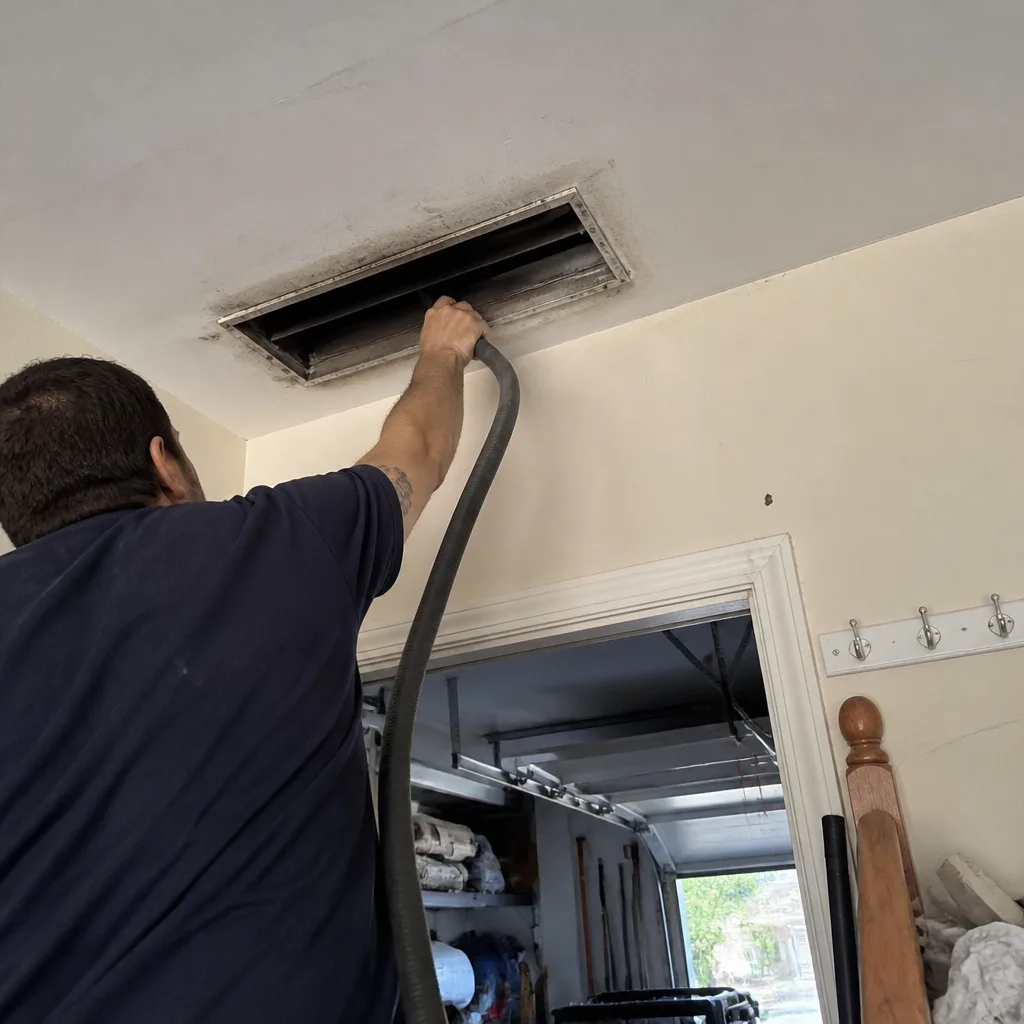 Before
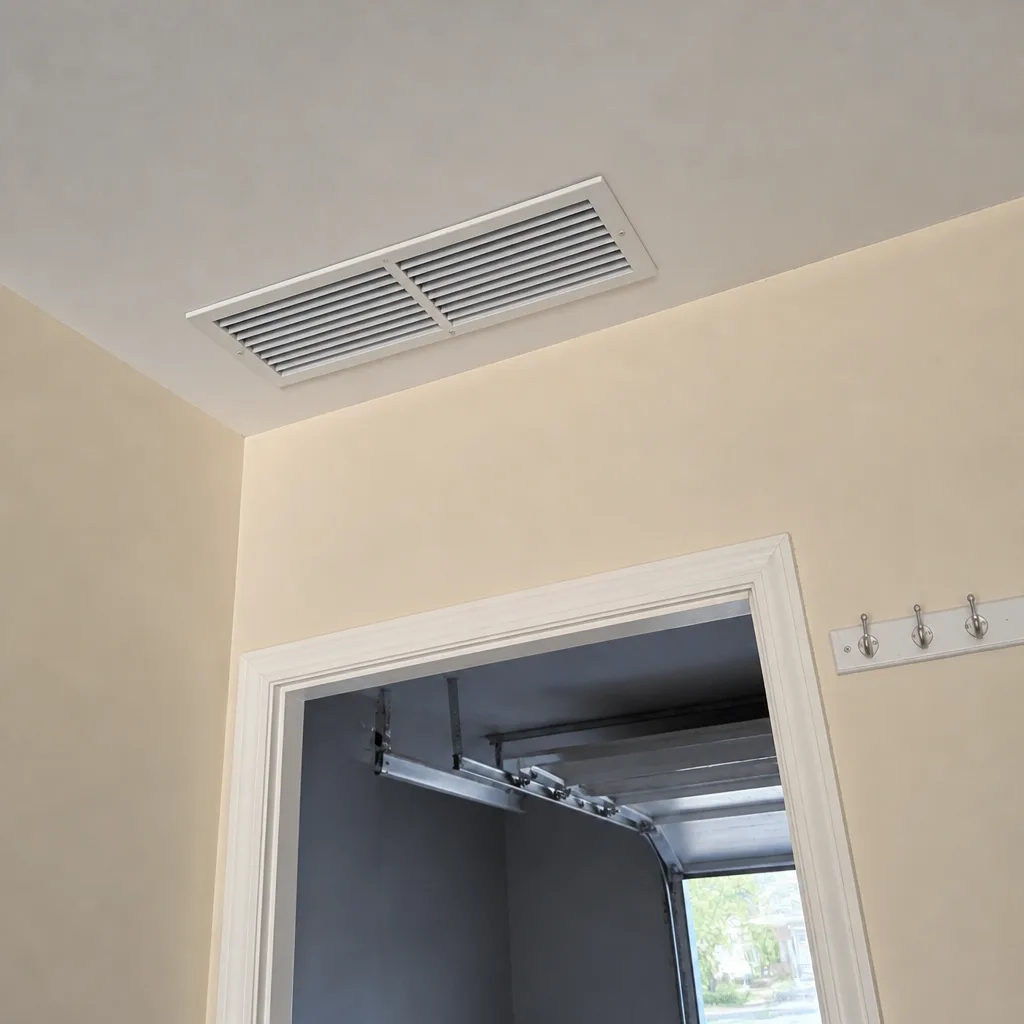 After
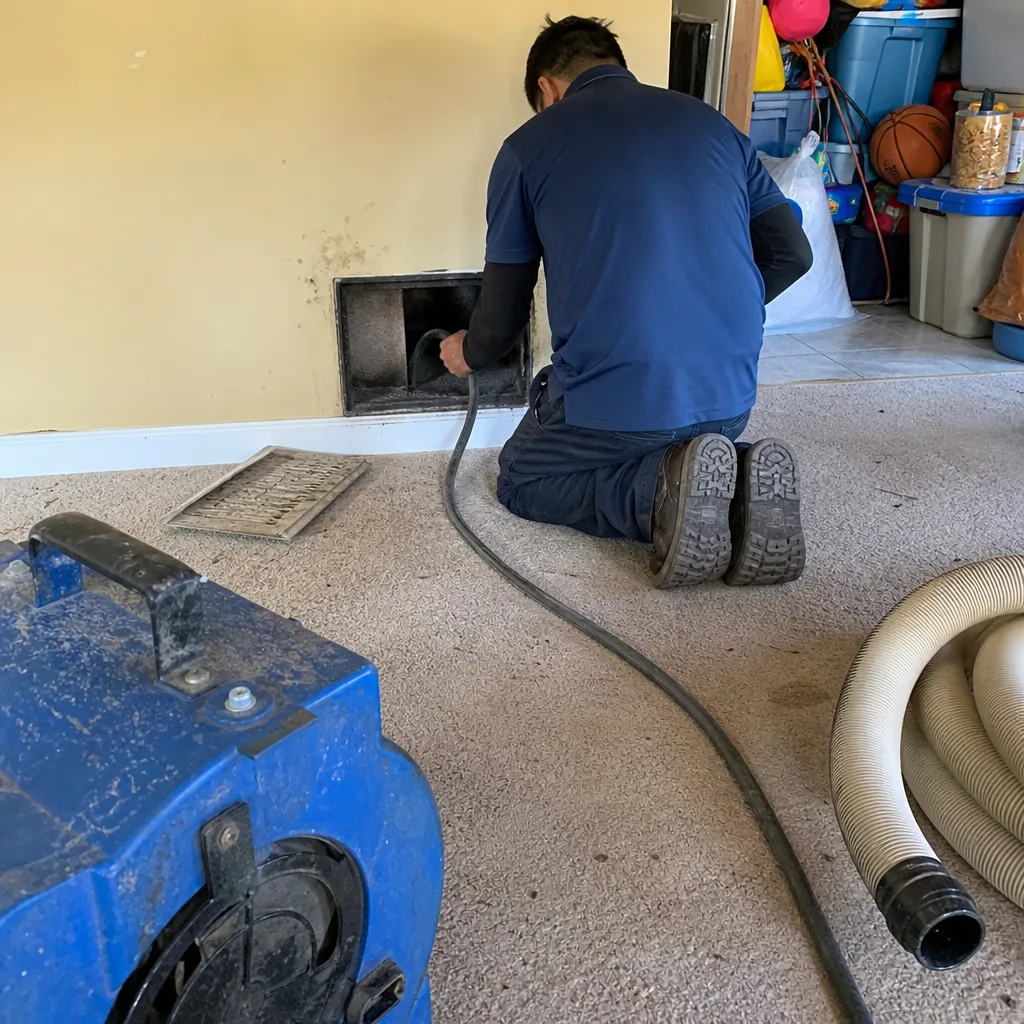 Before
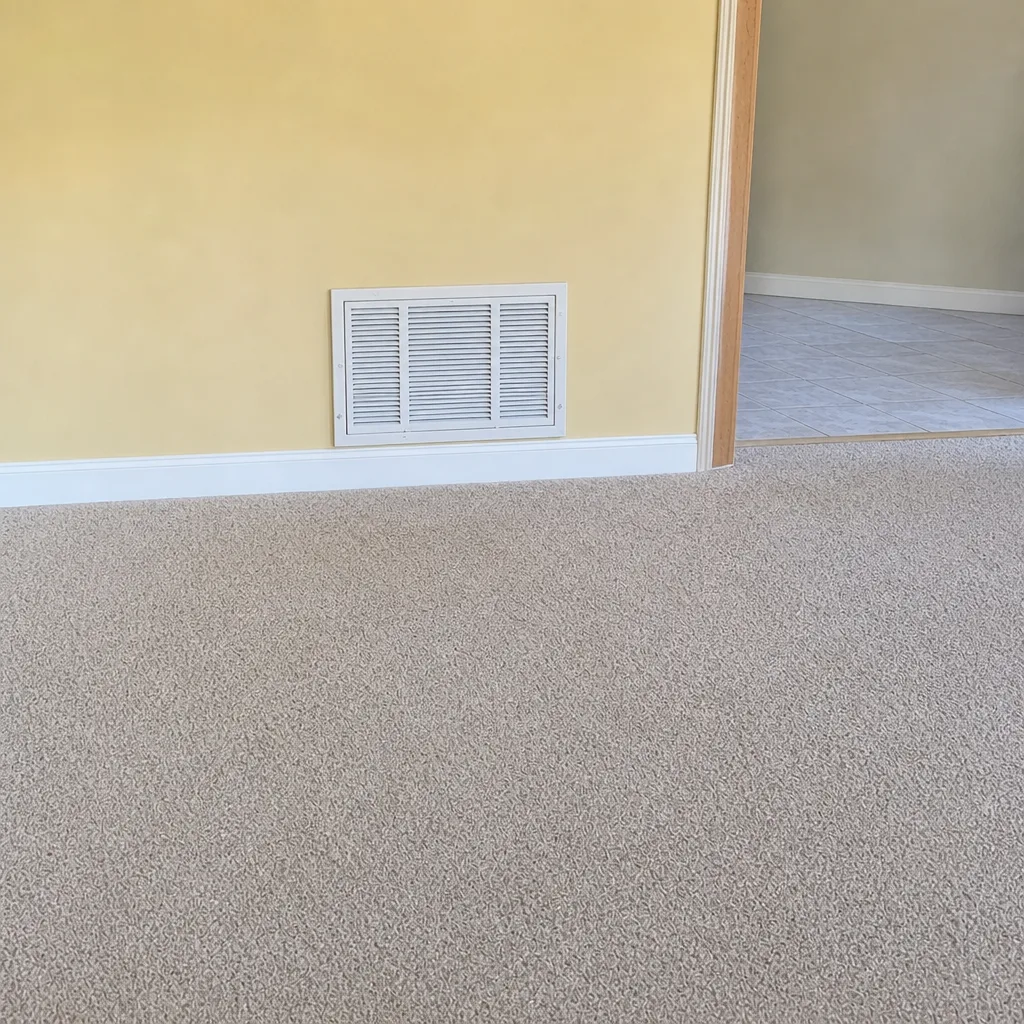 After
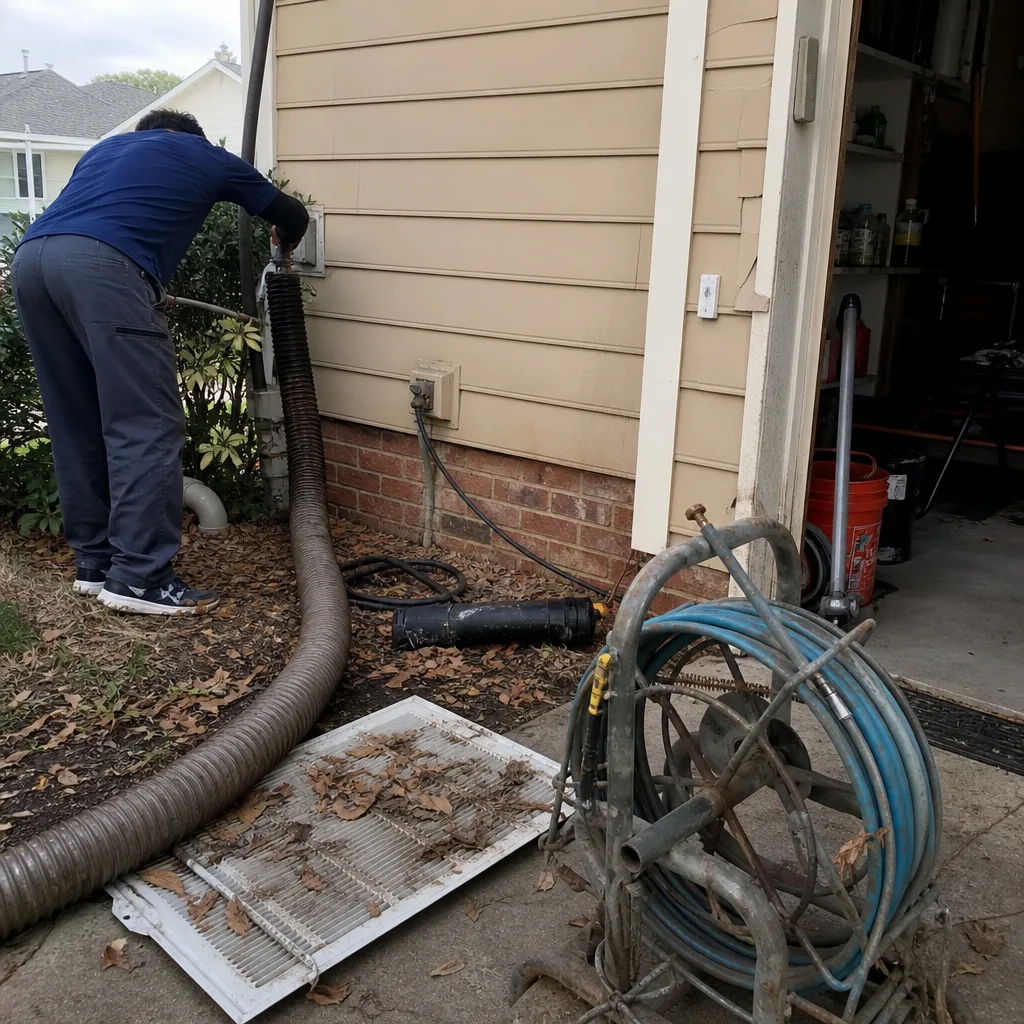 Before
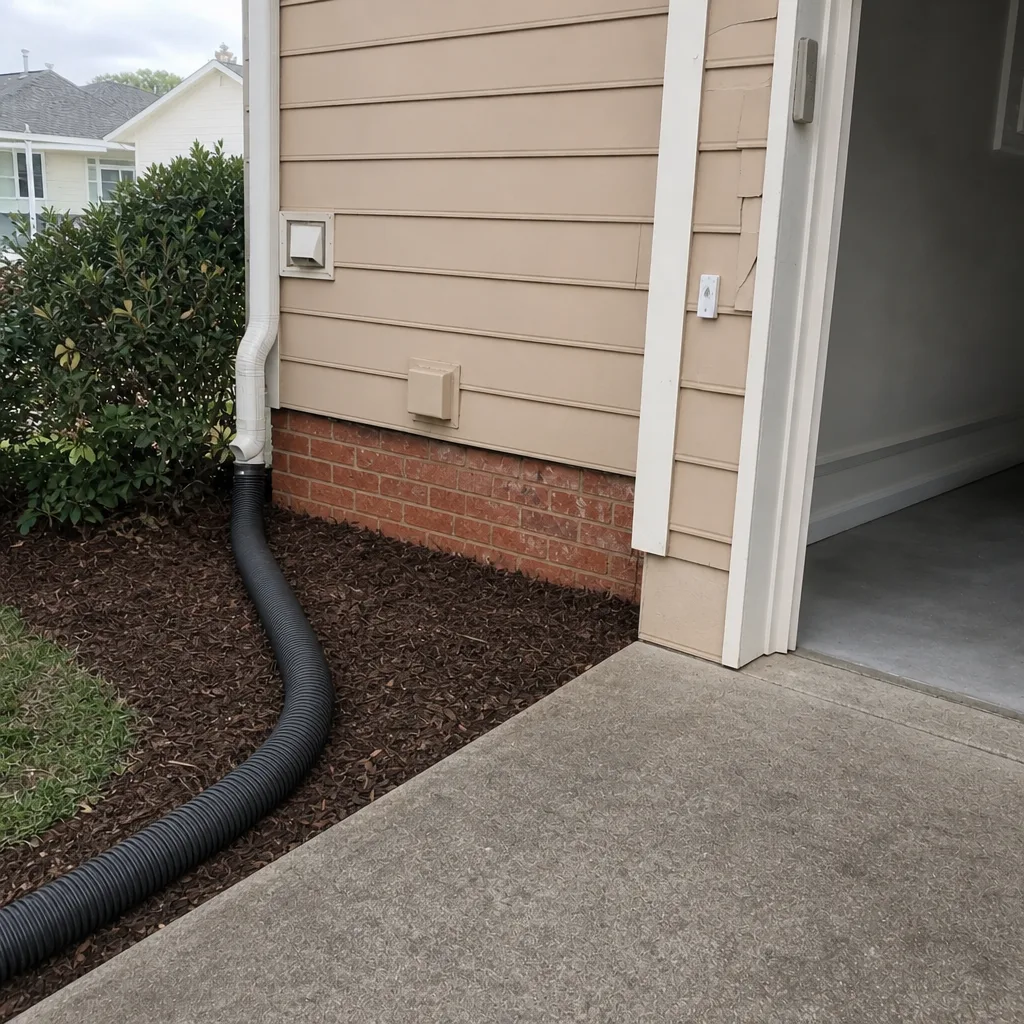 After
When to Call a Professional
Call a professional when the system needs something a vacuum and a brush can’t provide. That includes visible dust streaking or musty odor at registers, a recent renovation that left drywall dust in the system, moisture intrusion or humid attic conditions, a household member with respiratory sensitivity, a system that runs long cooling seasons without a documented professional clean, or any suspicion of microbial growth. These are the conditions where professional-grade negative pressure, contact agitation, and coil access make the difference between a surface pass and an actual clean. Air Duct Cleaning Brier Creek offers free estimates in Brier Creek. Call (833) 509-3460 to schedule. We answer 24/7. Fast dispatch from 7am to 7pm, Sunday through Friday.
Frequently Asked Questions
You can clean the register openings and accessible duct sections with a shop vac, but you can’t clean the duct system itself. A shop vac at a register creates no meaningful negative pressure in the duct system, so debris in trunk lines and branch runs stays where it is. DIY works for surface maintenance, not for whole-system cleaning.
The cost depends on system size, number of registers, whether the air handler and coil are included, and whether duct sealing is needed. Pricing is per job by written estimate, which sets the final price. Call (833) 509-3460 for a free estimate specific to your home.
Lower quotes usually reflect a smaller scope. If a quote doesn’t include negative-pressure extraction, contact agitation, air handler and coil cleaning, and access point methodology, it’s a partial service. Ask specifically what equipment they use and what the job includes before committing, so you’re comparing an apples-to-apples scope rather than a number.
Ask for before-and-after photos of your own duct interiors. A company that does real work will document it, because the difference in duct walls after contact agitation and extraction is visible. If a company can’t or won’t document the work, that’s a warning sign.
For most Brier Creek homes, every two to three years is a reasonable interval. Homes with pets, recent renovations, respiratory-sensitive occupants, or high HVAC run hours should schedule on a shorter cycle, since long cooling seasons push more air and more debris through the system faster. Call (833) 509-3460 if you’re unsure what interval fits your situation.
Cleaning registers is worth doing and it should be part of your routine maintenance. It doesn’t substitute for duct cleaning, because the registers are the visible surface and the contamination that drives air quality and energy cost lives in the trunk lines, coil, and air handler. Do both: the register cleaning on a regular schedule, and professional service on the longer interval.
The Bottom Line
DIY air duct cleaning is worth doing within its real limits: registers, grilles, filter housing, accessible duct sections, and dryer vent upkeep with the right brush kit. It saves money between professional services and it protects the equipment. What DIY cannot do is move settled debris in trunk lines, clean the coil, reach inaccessible flex duct, or treat biological contamination. Those need negative-pressure extraction, contact agitation, and proper access. If you want a full-system clean for your Brier Creek home, with equipment that can actually do the job, call (833) 509-3460 for a free estimate. We answer 24/7. Fast dispatch from 7am to 7pm, Sunday through Friday.
Written by the team at Air Duct Cleaning Brier Creek.