
Last updated November 23, 2026
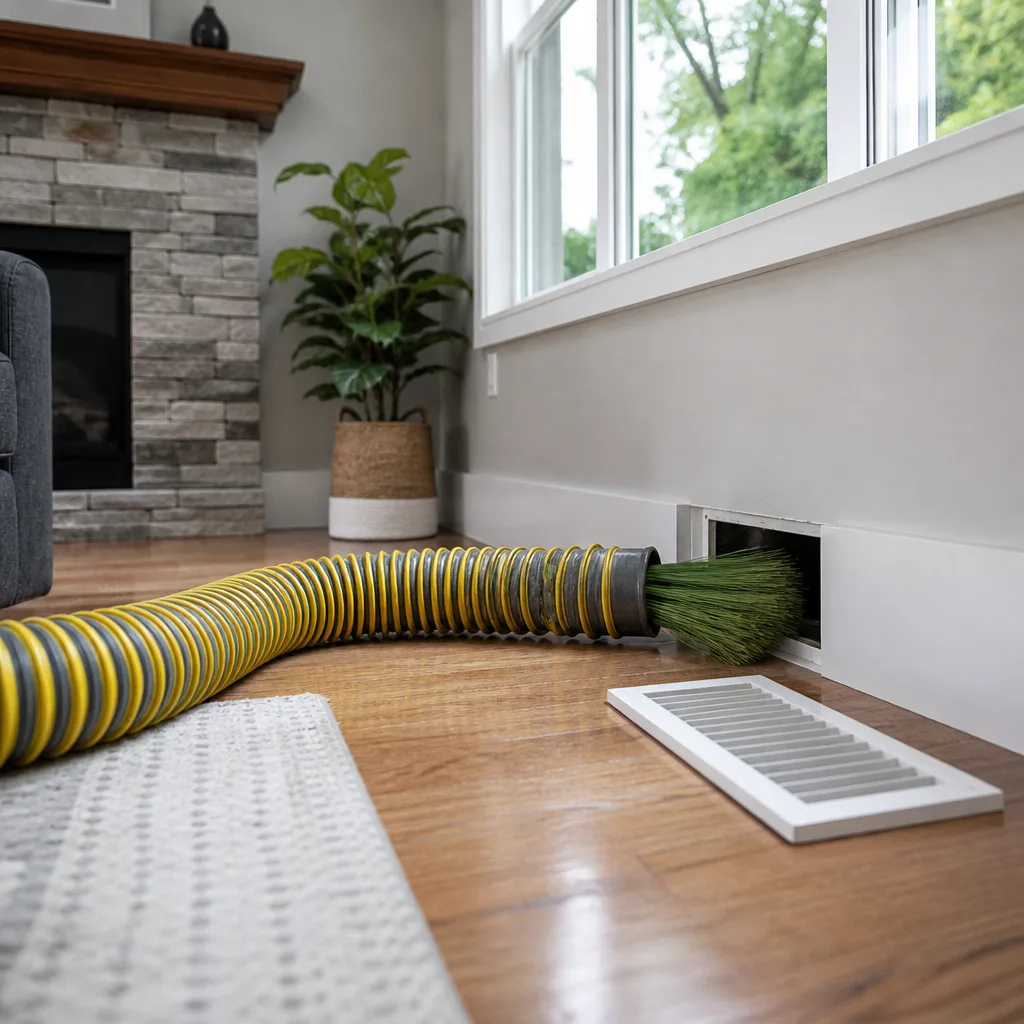 Whole-home duct cleaning
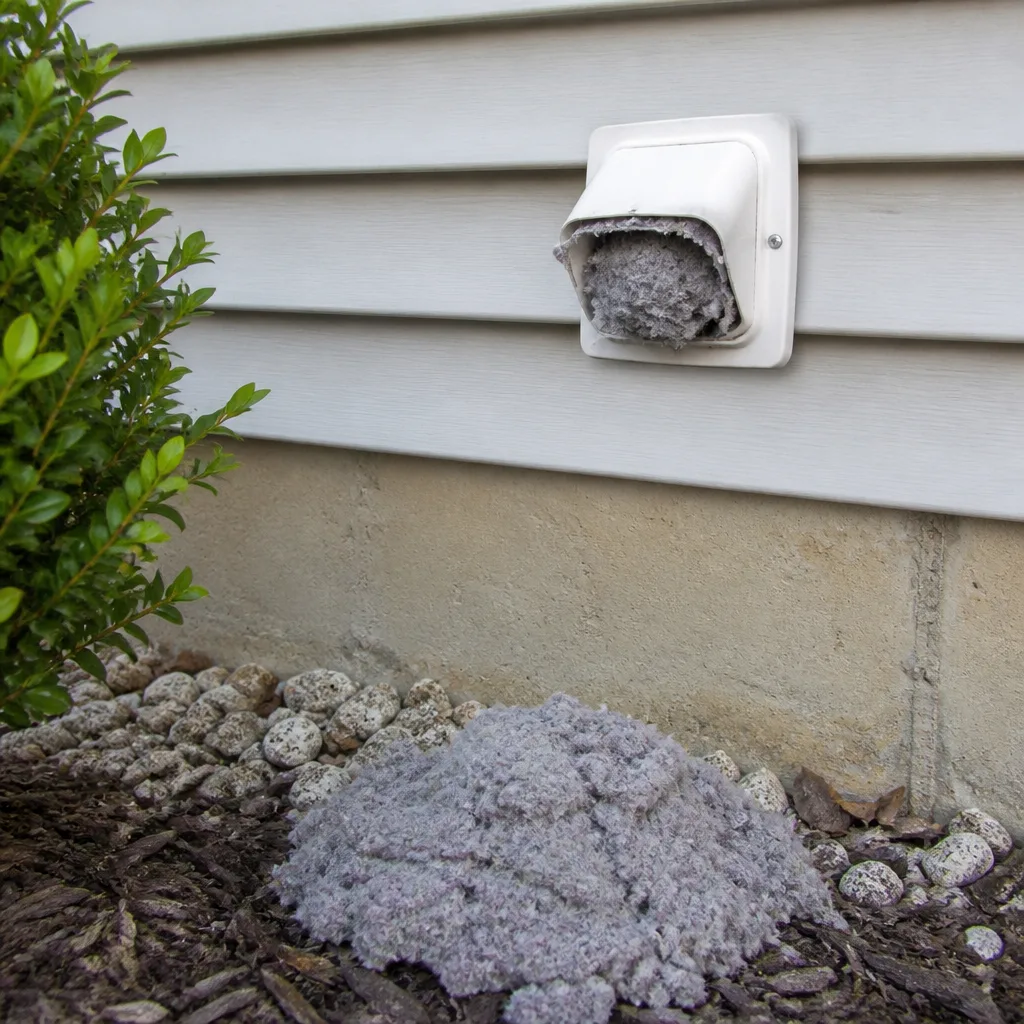 Dryer vent cleaning
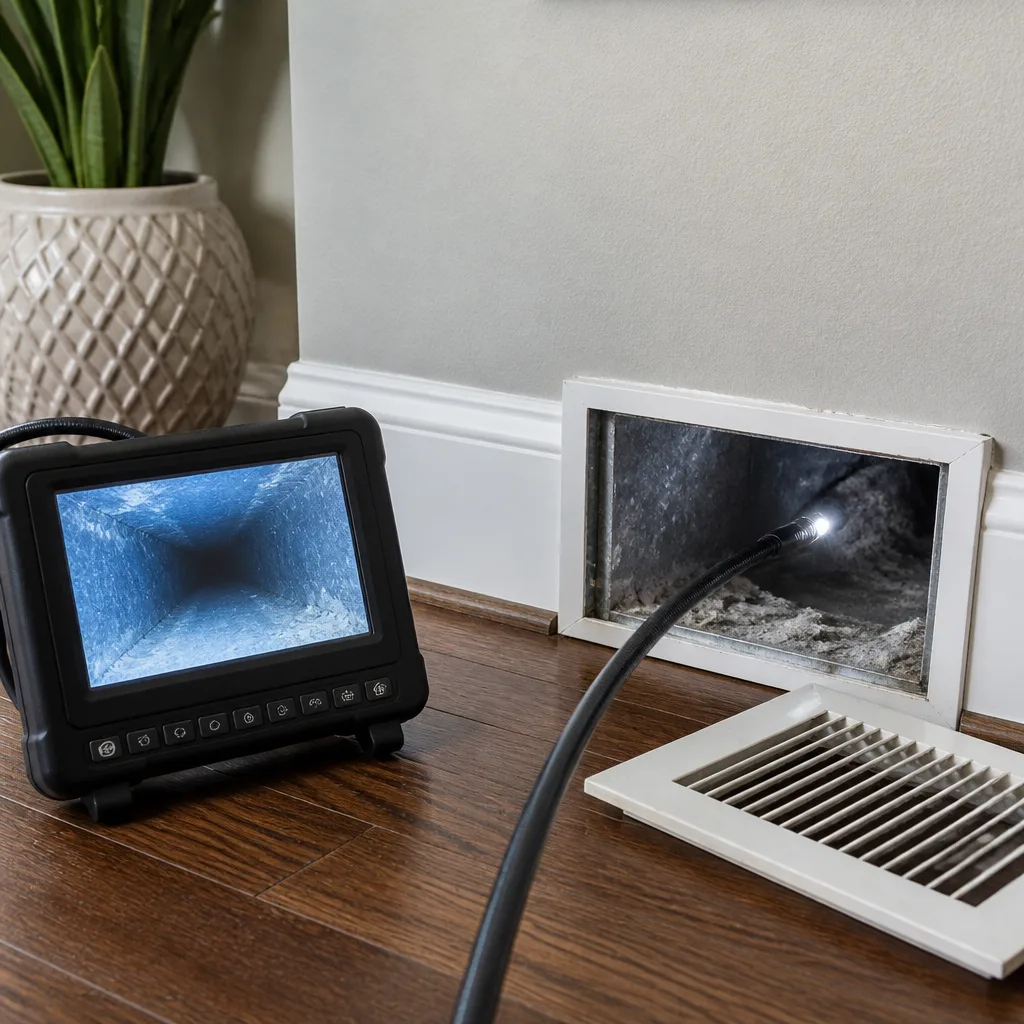 Camera inspection
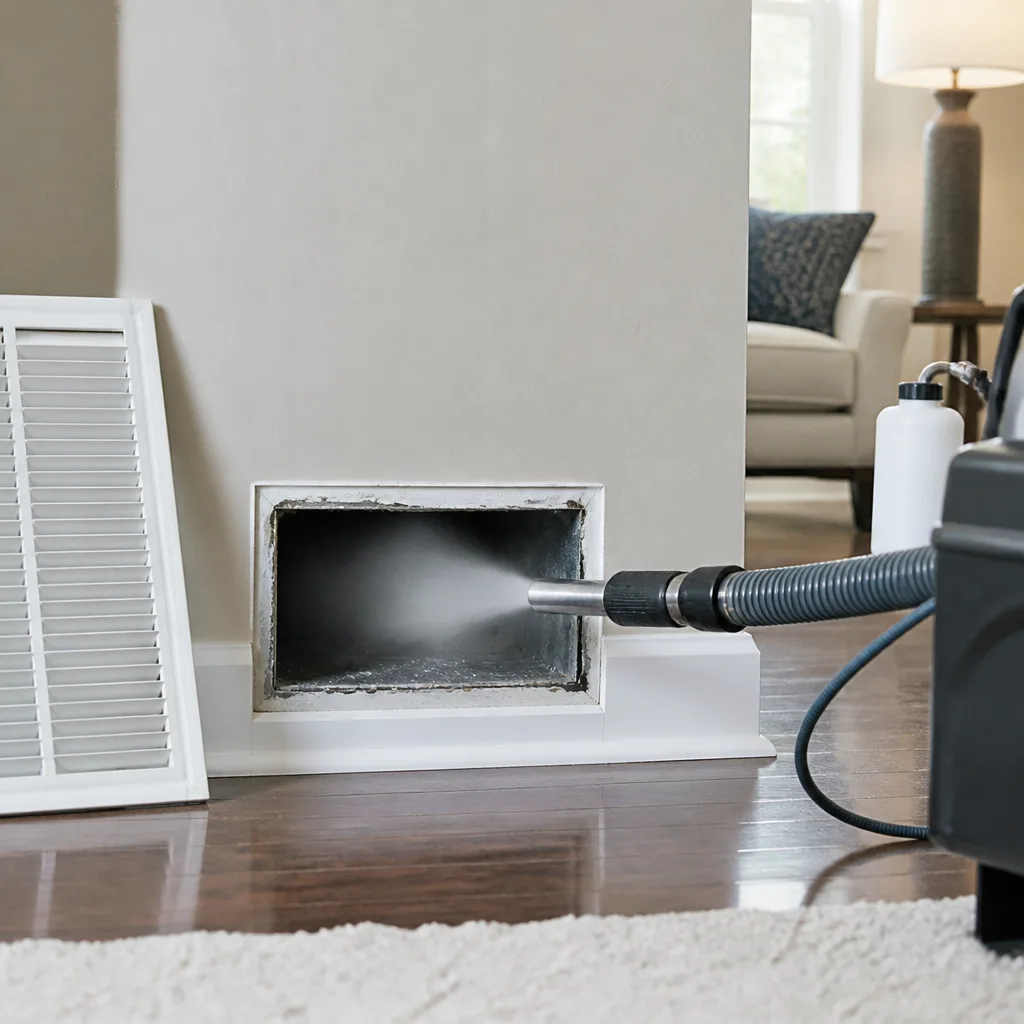 Sanitizing & deodorizing
Whole-system duct and dryer vent check with before-and-after photos - you see exactly what came out of your vents
That "$99 whole-house special" is a bait ad - the real number appears once they are in your hallway, or the "clean" is a shop-vac at the register. We photograph the inside of your ducts before and after instead.
Air Duct Cleaning Maintenance Checklist for Brier Creek Homeowners
Most homeowners change their air filter on a loose schedule and assume that’s enough. But the filter only captures what’s already moving through the return; it does nothing about settled debris in supply branches, deteriorating flex duct joints, or biological growth on the coil fins that develops silently between service visits. That’s the gap this checklist closes. Instead of handing you a generic twelve-month calendar, we’ve organized every task around what actually drives duct degradation in Brier Creek: HVAC run hours, seasonal events, and the specific signals your system sends before a small problem becomes a service call. You’ll learn what to inspect at each register, how to read filter pressure drop, when to photograph your duct system for a year-over-year baseline, and exactly where homeowner maintenance ends and professional intervention begins.
Quick Answer
A proper air duct maintenance checklist for Brier Creek homeowners centers on three trigger types rather than fixed dates: HVAC run hours (inspect filters every 200 to 300 hours of operation), seasonal events (coil inspection in April before cooling season, return intake check in November after leaf fall), and system signals like musty odor, visible register dust, or uneven airflow. Do the register-level inspections yourself, photograph accessible duct sections annually as a baseline, and bring in a professional when mold odor, debris depth beyond a light film, or measurable airflow imbalance appears. Our technicians have up to 12 years of experience reading exactly these signals in Brier Creek homes.
Styles & brands we work with
- Whole-home duct cleaning
- Dryer vent cleaning
- Camera inspection
- Sanitizing & deodorizing
Table of Contents
- Register-Level Inspection: What to Look For
- Filter Change Triggers Beyond the Calendar
- Brier Creek Seasonal Checkpoints
- Documenting Duct Condition Year Over Year
- Reading Airflow Imbalance Before It Costs You
- Why Sealing Matters as Much as Cleaning
- When a Checklist Item Becomes a Professional Job
- Indoor Air Quality Checks Between Service Visits
Register-Level Inspection: What to Look For at Supply and Return Grilles
Your registers are the diagnostic windows into the whole duct system. You don’t need to remove anything to read the early warning signs – a flashlight, a step stool, and five minutes per register is enough. What you’re looking for is anything that suggests the inside of the duct is dirtier than the grille face, or that air is escaping before it reaches the room.
Work through the house systematically, starting at the return grille because it’s usually the largest and dirtiest:
- Shine a light into the return. A light, even film is normal. Visible debris sitting in a layer, clumps, or anything textured and dark suggests the return trunk and the equipment behind it need professional attention.
- Check the supply grille fins and the frame edge. Dust streaking out around the frame – not on the fins, but around the outside of the frame – often indicates a gap between the boot and the drywall where air bypasses the filter path entirely.
- Look for black or green-gray discoloration. Any staining on the grille, the boot, or the visible duct interior that has color rather than plain dust is a sign of moisture and biological growth, not just dirt.
- Feel the airflow at each supply. Hold your hand about six inches from each register. You’re comparing registers to each other, not measuring. One weak register on the same trunk run while the others are strong points to a specific problem.
- Smell the grille. A musty or earthy odor at one register and not others tells you where the issue is concentrated.
None of these checks require tools or risk. They’re observations, and they feed directly into the professional inspection if you ever need one. Rotobrush contact cleaning is only effective when the technician knows what they’re actually dealing with – and the more precise your notes, the more targeted the job. When you want a full baseline read of the whole system, a professional air duct cleaning visit gives you one.
Filter Change Triggers Beyond the Calendar
“Change it every three months” is the most repeated and least useful air duct advice in Brier Creek. Three months is right for some homes and badly wrong for others. What actually matters is how many hours your system runs and how much particulate it’s moving. A home with a pet, an open-window habit, or a cooling season that runs long will load a filter far faster than the calendar suggests.
Treat these six conditions as change triggers instead of a fixed date:
- Run-hour threshold. For 1-inch pleated filters, plan on a change every 200 to 300 hours of blower operation. If you’re in peak cooling season with the fan running most days, that can arrive in six weeks.
- Pressure drop you can feel. Weak airflow at every register at once, together with a filter that looks darker than it did a month ago, is the classic sign of a loaded filter. Don’t wait for the schedule – change it.
- Bypass dust around the grille frame. Dust collecting on the frame edge outside the filter media means air is going around the filter, not through it. Check the filter size and seating; a filter that doesn’t fit snugly filters almost nothing.
- Allergy symptoms tracking the season. If symptoms get worse when the system runs, treat that as a checkpoint cue. A filter change plus a register walk-through is the first move; if it doesn’t help, escalate.
- After any renovation or drywall work. Fine drywall dust is the single fastest filter-clogging event in a home. Change the filter when the job is done, not at the next scheduled date.
- Filter visible loading. Hold the filter up to light. If you can’t see through it, it’s past due regardless of what the packaging says.
The filter is your first line of defense, not the whole system. A high-efficiency Honeywell or Aprilaire media filter cabinet handles far more particulate than a 1-inch slot filter, and it’s worth talking through a filtration upgrade alongside regular cleaning if filter changes feel like a constant chore in your Brier Creek home.
Brier Creek Seasonal Checkpoints: April and November
The Piedmont climate around Brier Creek gives your duct system two clear turning points a year, and both are worth a scheduled checklist pass. Our local pattern – a long cooling season bracketed by a short, mild winter – means the air handler works hard through the warm months and sits mostly idle through the cool ones. That idle period is when settled debris accumulates and biological growth gets its window.
April: Pre-Cooling Season Coil Inspection
Before the cooling season loads the system, do the indoor coil and air handler check – or have it done. The coil is where condensation is constant through the summer, and coil fins are where biological growth develops first, out of sight. In April, look at or have someone look at:
- Coil fin condition. Fin surfaces should be clean and bright. Dust-loaded, matted, or discolored fins mean reduced heat exchange and higher bills through the season.
- Condensate pan and drain line. Clear, dry, and free-flowing before the season starts. A clogged drain line in July is a wet-ceiling problem.
- Accessible duct joints. Flex duct connections at the plenum and at branch takeoffs should be sealed and tight. Loose joints lose air and pull in attic or crawlspace dust.
- Filter housing fit. Check that the filter seats fully and the cabinet door seals. This is the most common bypass point in any system.
November: Post-Leaf-Fall Return Intake Check
By November, leaf litter, seed fluff, and fine outdoor particulate have had a full season to work their way toward the return. Pull the return grille and inspect the intake duct and the filter housing behind it. Look for leaves or coarse debris drawn in through an outdoor intake, evidence of rodent activity in accessible flex runs, and a filter that’s loaded from the shoulder season. This is also the right moment to schedule HVAC cleaning if the coil and blower looked marginal in April – catching it before the cooling season means it’s fixed when it matters.
Documenting Duct Condition Year Over Year
A simple photo record turns every future professional inspection into a more productive one. It also gives you an honest way to answer the question every homeowner eventually faces: is this system getting worse, or does it just look bad? Dust is visual, and visual memory is unreliable. Photos aren’t.
Build a baseline file once, then update it annually. Here’s how to do it in about twenty minutes:
- Shoot every register the same way. Grille face and frame edge, straight on, with the flashlight at a consistent angle. Note the room name in the photo file name.
- Photograph the air handler and filter housing. The filter as installed (to show fit and any bypass gaps) and the clean filter in place after a change.
- Capture accessible duct sections. The plenum connection at the air handler, the main trunk where it’s visible, and at least one branch takeoff. These are the joints and surfaces that change first.
- Add a short written note. Date, what the airflow felt like at each register, and any odor or discoloration you noticed. Three lines is plenty.
- Compare the new set to last year’s. The goal isn’t to find a dramatic change – it’s to catch a gradual one early.
Photograph the same angles every year so the comparison is honest. When a professional team does arrive, a folder of dated photos tells them exactly where to look and what changed since last time. It’s a small habit that makes Air Duct Cleaning Brier Creek visits more useful and keeps you from paying to re-diagnose something you already have evidence for.
Reading Airflow Imbalance Before It Costs You Energy
Uneven airflow is the quietest problem on this checklist. Most homeowners notice it as “that one room is always a little warmer” and stop thinking about it. But a room that’s consistently weaker on the same run is a symptom, not a personality trait – and it usually points to a restricted branch, a disconnected or collapsed flex run, or an undersized return.
What to check, in order:
- Register-to-register comparison. Map the house room by room with your hand at each supply. Strong at most registers on a run but weak at one means the problem is downstream on that branch.
- Return sizing. A single small return serving a large system starves the whole house for air. If every room feels under-served, the return is the place to look.
- Supply register louvres. A half-closed or stuck louvre on a supply is easy to miss and easy to fix. Check that dampers at registers are actually open.
- Accessible flex runs. Flex duct that’s kinked, sagging, or crushed at a bend loses airflow dramatically. Look at the visible runs and note any that are pinched.
Nikro extraction equipment and a professional airflow read will tell you whether the imbalance is a duct problem or an equipment problem. Ask about the full-system picture if you want the whole pathway tested. Cleaning alone won’t restore airflow if the duct is torn or disconnected, which is why we treat sealing as a core service rather than an add-on.
Why Sealing the Leaks Matters as Much as Cleaning the Ducts
A duct system can be spotless and still waste a significant share of the air it moves – because air leaves through the joints, not the ducts. Flex duct joints at the plenum and at branch takeoffs are the most common leak points, and they loosen over time from thermal cycling and vibration. Sealing those leaks is what actually keeps cleaned ductwork clean and keeps conditioned air where it belongs.
What to look for at accessible joints:
- Gaps at the plenum connection, taped or untaped, that show a visible seam or daylight
- Disconnected flex duct collars, or mastic that has cracked and fallen away
- Tape that has dried out and lifted from the surface, since standard cloth tape fails over time
- Flex runs that pull taut at a joint and have separated the inner liner from the collar
When a leak is sealed properly, three things improve together: airflow at the far registers, energy efficiency because you’re no longer conditioning attic or crawlspace air, and indoor air quality because you’re no longer drawing unfiltered outside air into the supply path. That’s the heart of our full-system approach – seal the leaks, not just clean the ducts. A proper sealing job is done by a qualified technician, and it’s worth combining with your cleaning visit so the system is cleaned and tightened in one pass rather than two.
When a Checklist Item Crosses from Homeowner Maintenance to Professional Intervention
Most checklist items are yours to handle. But there’s a clear line where continuing to DIY stops being useful and starts being a way to keep diagnosing the same problem. Use these thresholds as the crossover points – if any of them is true, it’s time for a professional inspection.
- Mold odor that returns after cleaning the grille. If a musty or earthy smell persists after you wipe the register and change the filter, the growth is inside the duct or on the coil. That’s a job for professional cleaning and sanitizing.
- Visible debris depth. A fog of dust is normal. Debris you can see sitting in a layer, or debris you can reach into, means the duct interior needs contact cleaning – not a vacuum at the vent.
- Airflow imbalance that won’t resolve. If you’ve checked the registers, dampers, and filter and one zone is still weak, the restriction is inside the system.
- Any visible moisture or water staining. Moisture in a duct system is a health issue and a structural issue. It needs to be found and fixed.
- You can’t remember the last time the whole system was cleaned. A baseline professional cleaning tells you what condition the system is actually in.
Professional cleaning with Rotobrush contact cleaning, Nikro extraction, and Abatement Technologies air purification equipment addresses exactly these conditions. Our technicians have up to 12 years of experience and can diagnose the root cause rather than just running a vacuum and leaving.
Indoor Air Quality Checks Between Service Visits
Between professional visits, the indoor air quality side of your checklist is mostly about noticing change. The system itself won’t tell you when filtration is struggling – you feel it first, in allergy flare-ups, static, or that faint smell when the heat or AC first kicks on. Treat these as your interim IAQ checks:
- Allergy and irritation patterns. If symptoms track the system running, the system is a likely contributor.
- Musty odor at startup. A brief smell when the blower starts suggests something growing in the coil or duct.
- Visible dust settling faster than usual. Increased surface dust means filtration is underperforming, either from a loaded filter or a bypass gap.
- Humidity swings. A system that can’t hold a steady humidity level is working harder than it should and may have an airflow problem behind it.
If those signals point toward filtration rather than cleaning, a filtration upgrade alongside your service is worth considering. We stock and service Honeywell and Aprilaire air quality systems, which lets us combine cleaning with a filtration improvement in a single visit instead of two. Sanitizing treatments with Guardsman-grade protective products are also available as part of the sanitizing process if biological growth is part of what you’re dealing with.
Common Mistakes to Avoid
- Treating “every three months” as gospel. Run hours and loading matter more than the calendar. A Brier Creek home in a long cooling season can load a filter in six weeks.
- Confusing a clean grille face with a clean duct. The grille is the visible surface; the interior of the branch is what drives air quality. Wiping the grille is not maintenance.
- Skipping the filter fit check. A filter that doesn’t seat snugly lets air bypass the media entirely. Check the fit, not just the change date.
- Ignoring one weak register. A consistently weak register on the same run points to a restriction or a disconnected flex run. It’s worth looking at, not living with.
- Assuming cleaning is the whole fix. Leaking joints waste air no matter how clean the duct is. Sealing is part of the checklist, not a separate concern.
- Skipping the annual photo record. Without photos, every year’s condition looks “about the same,” and real degradation goes unnoticed until it’s a repair.
- Waiting for a musty smell to become strong. The faint odor at startup is the early signal; the strong odor is the late one.
See the difference
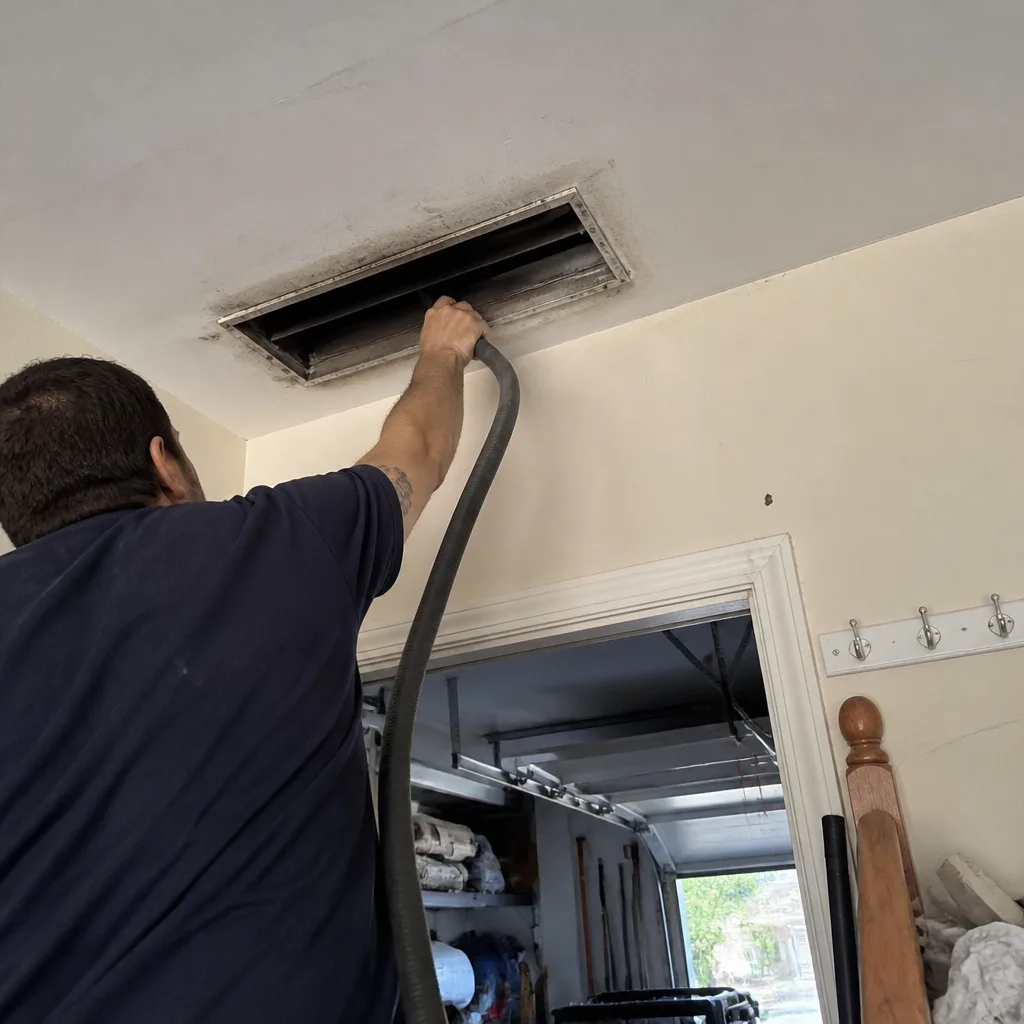 Before
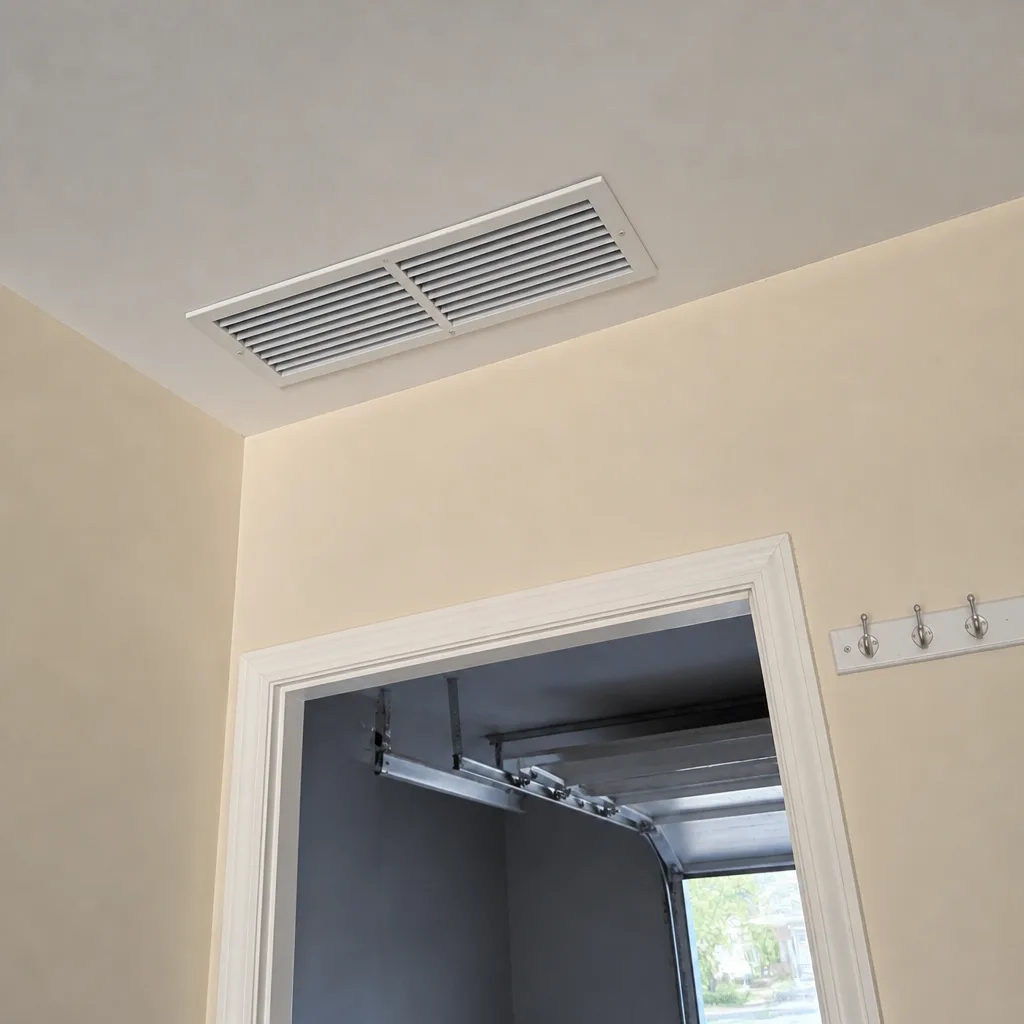 After
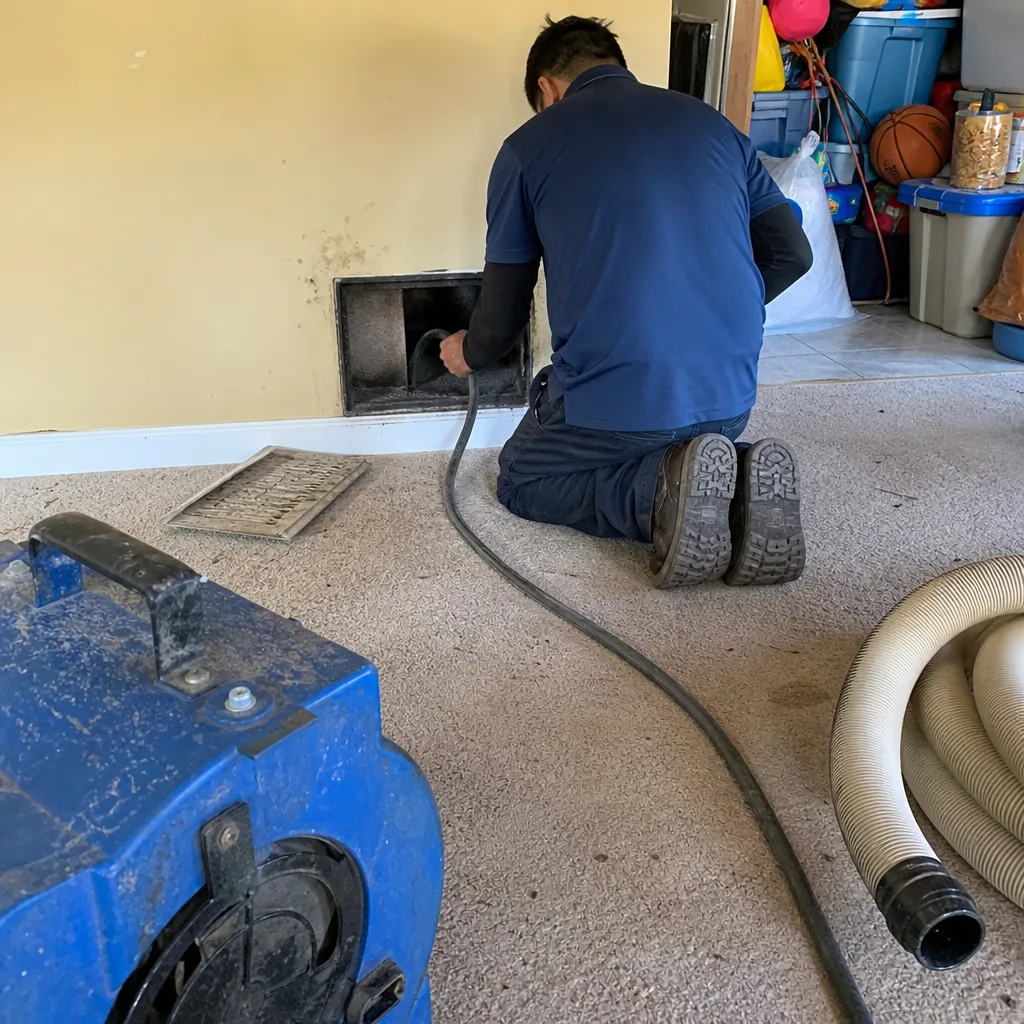 Before
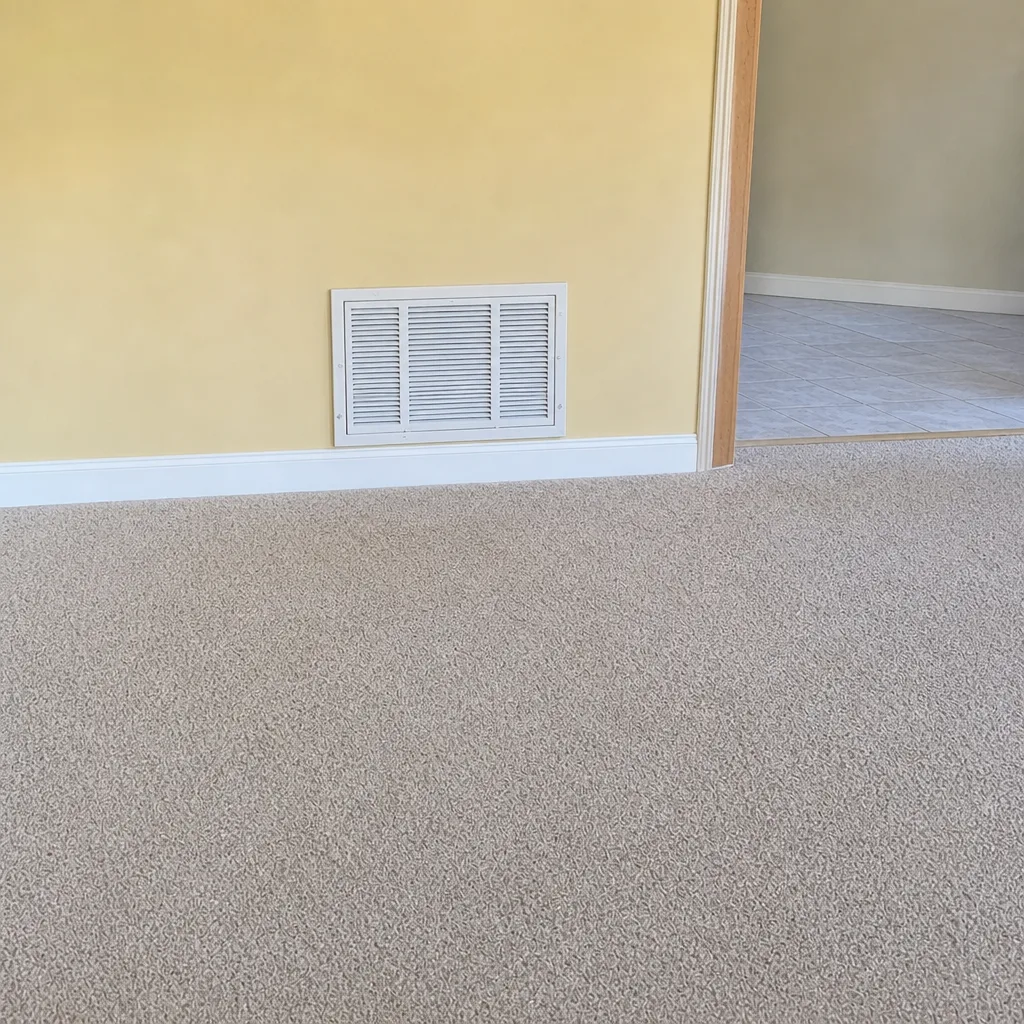 After
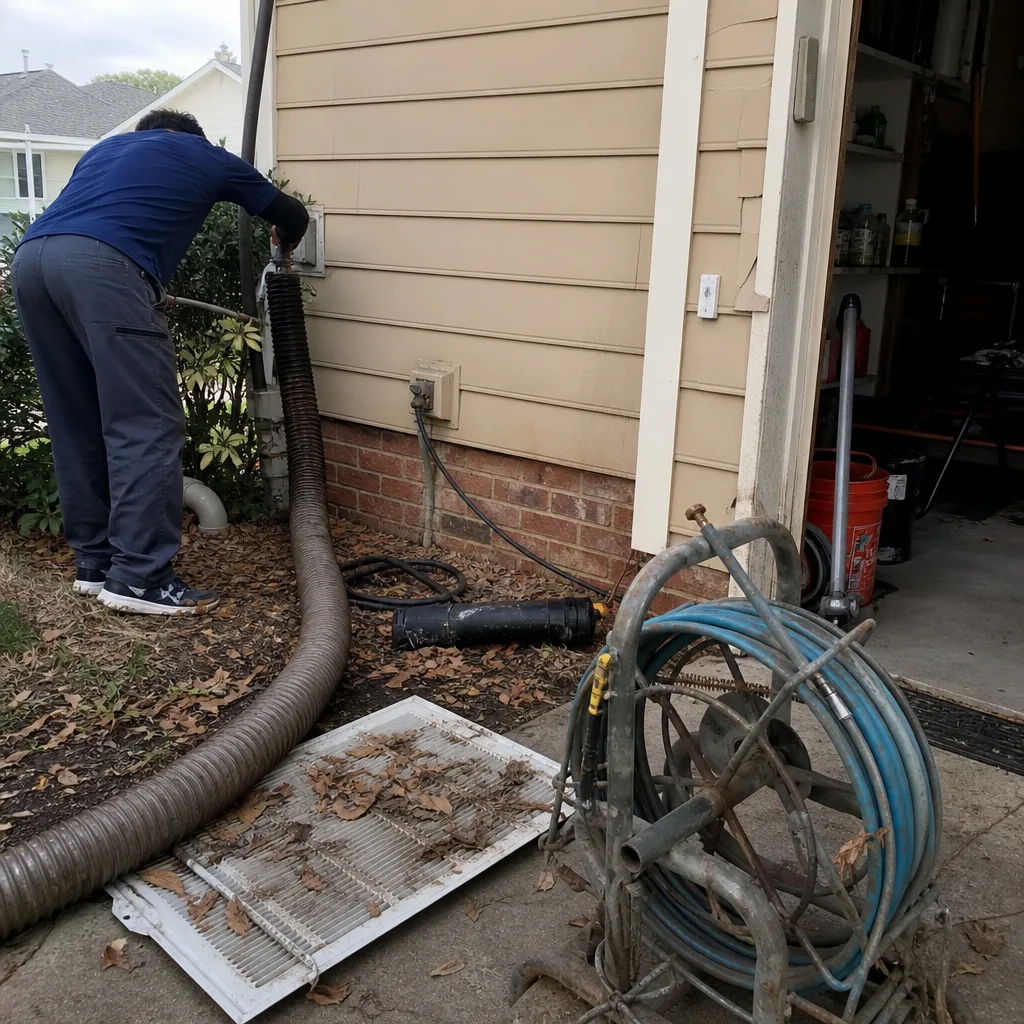 Before
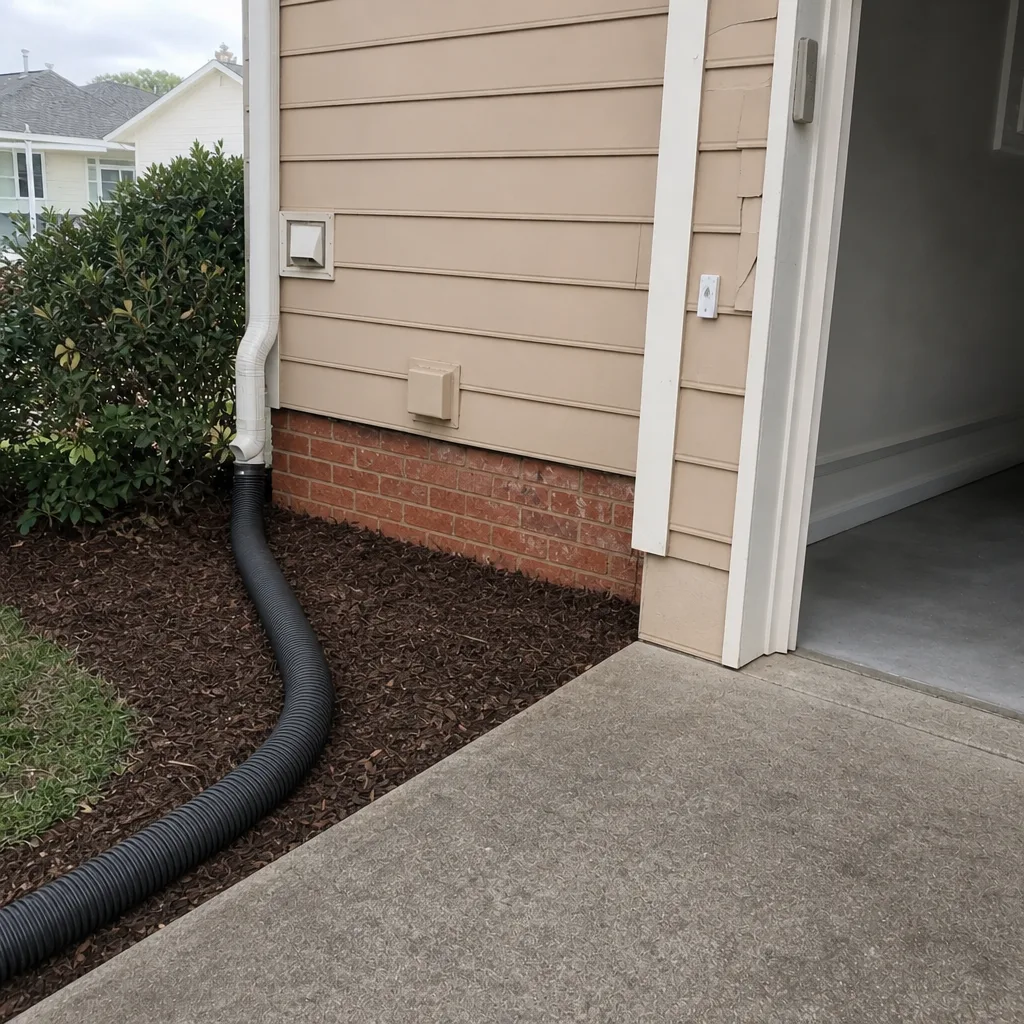 After
When to Call a Professional
Call a professional when the checklist points to a condition you can’t resolve at the register: persistent mold odor after cleaning and filter changes, visible debris depth inside the ducts, airflow imbalance you’ve already checked dampers and filters for, or any moisture or water staining in the system. A closed, inaccessible duct system also means you simply can’t see the problem – and that’s a professional diagnostic job. If you can’t remember the last full-system cleaning, a baseline visit is the honest starting point.
Air Duct Cleaning Brier Creek offers free estimates in Brier Creek – call (833) 509-3460. We answer 24/7. Fast dispatch from 7am to 7pm, Sunday through Friday. Every job is quoted per system with the price set by the written estimate before work starts, and before-and-after photos of your own ducts come with the job. The local pro we connect you with is licensed and insured as the state requires.
Frequently Asked Questions
Most Brier Creek homes are well served by a professional cleaning every two to three years, but the honest answer depends on loading and signals rather than a fixed calendar. If you see visible debris depth, musty odor, or a persistent airflow imbalance, that’s the trigger regardless of the date. Your annual photo record and register walk-through will tell you when the system has changed enough to warrant a visit. Call (833) 509-3460 for an exact quote on your system – estimates are free.
Air duct cleaning in Brier Creek is priced per system, not per vent, and the exact figure is set by a written estimate after we assess the size and condition of your system. Whole-system pricing depends on how many trunks and branches you have, whether sealing or sanitizing is part of the job, and how accessible the ductwork is. We quote one flat price per system before work starts, with before-and-after photos of your own ducts. Call (833) 509-3460 for an exact quote – estimates are free.
Low quotes usually mean the job is being priced per vent with a surface vacuum rather than a true internal contact cleaning of the whole system. A contact cleaning method, like Rotobrush, physically agitates and extracts debris from the duct walls, which takes longer and uses more equipment than a quick pass at each register. The cheaper job can leave the debris that matters still in place. Our pricing is per system with one flat price agreed in writing before the work begins, so there are no surprises on the invoice. Call (833) 509-3460 for a free estimate.
Ask for before-and-after photos of your own ducts – not stock photos, your system. A professional cleaning should include a register-level walkthrough and documentation of the condition found and the condition left behind. Our jobs come with before-and-after photos of your own ductwork, and the process uses professional-grade equipment (Rotobrush contact cleaning, Nikro extraction) rather than a consumer vacuum. Call (833) 509-3460 to talk through what your job will include – estimates are free.
The register-level inspection, filter change triggers, seasonal checkpoints, and photo documentation are all homeowner tasks – you can do them safely with a flashlight and a step stool. What you shouldn’t handle yourself is anything inside the duct, on the coil, or in the electrical and equipment cabinets. The checklist is designed to tell you when it’s time to call, not to have you cleaning internal components. Call (833) 509-3460 whenever a checklist item crosses that line – estimates are free.
Yes. The Piedmont climate here means a long cooling season with a short, mild winter, so the air handler runs hard for most of the year and sits idle in the cool months when settled debris accumulates. That pattern makes the April pre-cooling season coil inspection and the November post-leaf-fall return check the two checkpoints that matter most locally. If either one turns up something beyond a light film, call (833) 509-3460 for a free estimate.
The Bottom Line
Maintaining a duct system in Brier Creek isn’t about following a generic twelve-month calendar. It’s about three trigger types: run hours, seasonal events, and system signals. Inspect your registers and return grille yourself with a flashlight, change filters on loading and fit rather than the date, do the April coil inspection and November return check, and keep a simple photo record year over year. Those habits catch degradation before it becomes a service call. When a checklist item crosses into mold odor, visible debris depth, or unresolved airflow imbalance, it’s a professional job – and a cleaning and sealing visit addresses the root cause, not just the symptom. Our technicians have up to 12 years of experience with exactly these systems. Call (833) 509-3460 for a free estimate on dryer vent cleaning or any other full-system service. We answer 24/7. Fast dispatch from 7am to 7pm, Sunday through Friday.
Written by the team at Air Duct Cleaning Brier Creek.